Instructor-led live training courses on Software Design, whether delivered online or onsite, illustrate the core principles of Software Design through engaging discussions and practical exercises.
Software Design training is offered as "online live training" or "onsite live training." Online live training (also known as "remote live training") takes place via an interactive remote desktop. Onsite live training can be conducted locally at the customer’s premises in Nijmegen or at NobleProg’s corporate training centers in Nijmegen.
NobleProg -- Your Local Training Provider
Nijmegen
Fifty Two Degrees, Jonkerbosplein 52, Nijmegen, Netherlands, 6534 AB
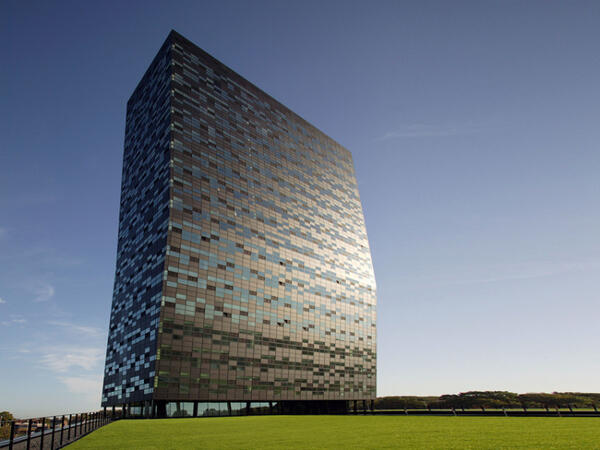
Located in FiftyTwoDegrees, a striking black tower of 18 floors with a 'kink' in the top that is at an angle and known as an unrivaled business address in the east of the Netherlands. FiftyTwoDegrees is designed as a unique business, cultural and social center and is a combination of high concentration of knowledge companies and well thought-out offices that are grouped around a central square

Wageningen
Wageningen WUR, Stippeneng 2 , Wageningen, netherlands, 6708 WE
Wageningen is located on the banks of the Lower Rhine. Excavations date to the first settlements in this area around the Stone Age. The hills to the east of the city offered protection from floods of the Rhine from the Bronze Age. The city has a turbulent history and has been occupied or destroyed several times. The Rhine also changed course in 1421, moved further south and therefore had an adverse effect on the Wageningen trade. In the 17th century, the city started growing tobacco and there were several cigar manufacturers. The floodplains of the Rhine to the south also had several brickworks, one of which can still be seen.
In 1876, the Dutch government decided to build the first agricultural school in Wageningen because it was in the heart of the country and surrounded by a wide variety of soils. Since then, the city has grown enormously and Wageningen University is now a world-famous Life Sciences university. Wageningen also has an important inland port.
The halls of Impulse
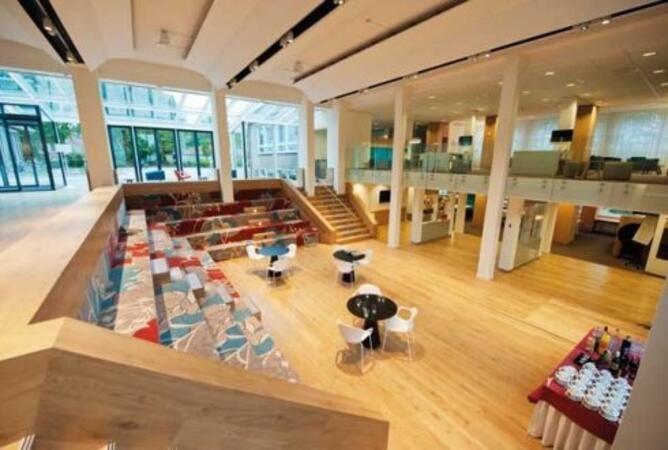
Centrally located on Wageningen Campus, near the De halen van Impulse. The glass building and the cheerful colors provide a welcoming atmosphere. Impulse is an excellent location for not too large symposia or training courses. Impulse is located in building 115 on the Campus.
Address Stippeneng 2
6708 WE Wageningen
Wageningen Campus is indicated at the main roads of Wageningen. Follow the P-route to P3 on the campus. The route is indicated from all large parking spaces to the individual buildings on the campus. Impulse's building number is 115.
Arnhem
Arnhem Park Tower, Nieuwe stationsstraat 20, Arnhem, Netherlands, 6811 KS
The Arnhem Nijmegen region is known as a conference destination and has a thriving food and health sector, thanks in part to the presence of two universities.
The Park Tower is located in a modern building on top of the train station in the center of Arnhem's business district. The railway connects the city to national and international cities. Moreover, Arnhem is close to the German border and is easily accessible due to the many train routes. From the 13th and 14th floors of the city center you have a view over the city and the World Trade Center is right next door.
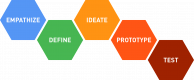
Design Thinking is a human-centric approach to problem-solving that leverages empathy, definition, ideation, prototyping, and testing. This course places significant emphasis on the Empathize stage, helping learners connect previously identified challenges to the genuine needs of internal stakeholders while applying dynamic, collaborative activities to transform insights into actionable results.
Delivered as live instructor-led training (available online or onsite), this program is designed for beginner to intermediate-level teams and leaders aiming to enhance their empathy skills, strengthen relationships with internal stakeholders, and convert pain points into meaningful opportunities for improvement.
Upon completion of this training, participants will be able to:
Utilize empathy-based techniques to discover and validate stakeholder needs.
Convert mapped pain points into clear, actionable requirements.
Participate in dynamic role plays and simulations to practice client-centered dialogue.
Collaboratively redefine problem statements from the stakeholder's viewpoint.
Course Format
Interactive lectures and guided discussions.
Engaging, hands-on role plays and empathy exercises.
Group workshops focused on collaborative problem reframing.
Customization Options
For a customized version tailored to specific internal processes (such as procurement or equipment provisioning), please contact us to arrange.
Design Thinking is a human-centered approach to problem-solving that leverages empathy, definition, ideation, prototyping, and testing. By focusing on the initial two phases—Empathize and Define—teams can gain a deeper understanding of internal clients and accurately identify the problems that need solving.
This instructor-led training session, available both online and onsite, is designed for teams and leaders at a beginner to intermediate level. The goal is to help participants strengthen their relationship with internal clients, minimize resistance to change, and enhance operational efficiency through practical, collaborative methods.
Upon completing this training, participants will be able to:
Employ active listening and interviewing techniques to collect valuable insights about internal clients.
Develop empathy maps to document user needs and pain points.
Distinguish between actual root causes and perceived issues using tools such as the 5 Whys and problem trees.
Compose clear, actionable problem statements (POVs) to guide solution development.
Course Format
Interactive lectures and group discussions.
Hands-on practical exercises and role-playing activities.
Group workshops and plenary feedback sessions.
Customization Options
For a customized version tailored to specific internal processes (such as procurement or equipment provisioning), please contact us to arrange.
This instructor-led live training in Nijmegen (online or onsite) is designed for beginner to intermediate-level professionals who wish to understand and apply Design Thinking methodologies to drive innovation and improve business solutions.
By the end of this training, participants will be able to:
Understand the core principles of Design Thinking and its role in innovation.
Apply the five phases of Design Thinking to problem-solving.
Utilize ideation techniques and tools to foster creativity.
Implement Design Thinking strategies to improve processes and enhance efficiency.
This instructor-led, live training in Nijmegen (online or onsite) is aimed at beginner-level to intermediate-level participants who wish to solve everyday workplace challenges through gamification techniques.
By the end of this training, participants will be able to:
Understand the principles of Design Thinking and its application to problem-solving.
Incorporate gamification techniques to foster engagement and innovation.
Develop creative and practical solutions to common workplace issues.
Collaborate effectively across teams to implement problem-solving strategies.
Apply iterative approaches to refine solutions through feedback and experimentation.
Domain-Driven Design (DDD) is a methodology for software development that focuses on building systems centered around the business domain, utilizing a shared ubiquitous language along with tactical and strategic modeling techniques.
This instructor-led live training (available online or in-person) is designed for advanced senior developers who aim to leverage DDD principles to create robust, maintainable, and scalable systems.
Upon completing this training, participants will be capable of:
Identifying and modeling core domain concepts using ubiquitous language and bounded contexts.
Applying tactical DDD patterns such as entities, value objects, aggregates, repositories, and domain services.
Designing context maps and strategic boundaries to manage complexity across microservices and teams.
Integrating DDD practices into Agile teams and CI/CD workflows to enhance collaboration and delivery efficiency.
Course Format
Interactive lectures and discussions.
Extensive exercises and practical application.
Hands-on implementation in a live-lab environment.
Course Customization Options
To request customized training for this course, please contact us to arrange.
This instructor-led, live training in Nijmegen (online or onsite) is aimed at intermediate-level developers, architects, and analysts who wish to learn and apply DDD concepts and practices to their software projects.
By the end of this training, participants will be able to:
Grasp core DDD concepts (bounded contexts, entities, etc.) and their application in software projects.
Apply strategic DDD to define and design the domain model, identify subdomains, and establish boundaries.
Implement tactical DDD using patterns such as CQRS, factories, and event sourcing.
Refactor and modernize legacy systems effectively with DDD techniques.
Design and implement product, domain, and team-oriented architectures.
Utilize data mesh to create a domain-oriented data platform supporting data discovery and governance.
This instructor-led, live training in Nijmegen (online or onsite) is aimed at beginner-level leaders and HR professionals who wish to learn and apply Design Thinking methodologies to foster innovation, enhance problem-solving capabilities, and engage teams effectively.
By the end of this training, participants will be able to:
Equip participants with tools and methodologies to foster innovation and team engagement.
Develop skills in empathy mapping, ideation, and prototyping for solving complex challenges.
Apply Design Thinking principles to leadership and HR scenarios.
Promote a culture of innovation within tech teams.
This instructor-led, live training in Nijmegen (online or onsite) is aimed at intermediate-level Java developers who wish to apply design patterns to improve software structure, maintainability, and scalability.
By the end of this training, participants will be able to:
Understand the purpose and benefits of design patterns.
Apply Creational, Structural, and Behavioral patterns effectively in Java.
Improve code reusability, scalability, and maintainability.
Refactor existing codebases using design patterns.
This instructor-led live training in Nijmegen (online or on-site) targets beginner to intermediate-level software and systems architects aiming for a comprehensive understanding of Sparx Enterprise Architect.
By the conclusion of this training, participants will be able to:
Navigate and proficiently utilize Sparx Enterprise Architect, gaining familiarity with its interface and toolset.
Create models for various business structures, such as organizational charts, processes, and systems, employing a variety of diagram types.
Establish strategies for change tracking, version control, and team collaboration within the Sparx EA environment.
Leverage advanced capabilities of Sparx EA, including stereotype-based modeling, customization options, and task automation.
In recent years, the advancement of microservices and container technologies has fundamentally transformed how software is designed, developed, deployed, and operated. To meet these modern demands, applications must be optimized for scalability, elasticity, fault tolerance, and adaptability. Consequently, contemporary architectures necessitate a distinct set of patterns and practices. This training explores methods to identify, comprehend, and adapt to these evolving requirements.
Audience
This course is designed for professionals who possess a foundational knowledge of container technology and Kubernetes concepts but may lack extensive practical experience. Rooted in use cases and lessons learned from real-world projects, the training aims to inspire participants to design and manage superior cloud-native applications.
Developers
Operations Specialists
DevOps Engineers
QA Engineers
IT Project Managers
Format of the Course
Interactive lectures and discussions
Extensive exercises and practical sessions
Hands-on implementation within a live laboratory environment
Course Customization Options
To request a customized training program for this course, please contact us to arrange.
In this instructor-led live training, participants will gain a deep understanding of the fundamental and advanced concepts of software architecture and design. The course is built around a series of hands-on lab exercises and interactive discussions that allow learners to apply their knowledge in practical scenarios.
Audience
Software professionals
Software designers
Developers
Format of the Course
Combination of lectures, group discussions, and extensive hands-on practice.
Note
To request customized training for this course, please contact us to arrange.
Domain-Driven Design (DDD) constitutes a robust software development methodology centred on modelling intricate system behaviours by harmonising technical execution with fundamental business principles. This curriculum examines how DDD enables teams to navigate complexity and mitigate risks via strategic and tactical patterns. Participants will acquire the skills to construct a 'Ubiquitous Language', establish distinct boundaries through Bounded Contexts, and leverage essential components such as Entities, Value Objects, and Aggregates. The ultimate objective is to develop adaptable and maintainable software architectures that stay aligned with the evolving business landscape.
Proven design patterns are widely accessible. Implementing them often involves adapting existing concepts to specific technologies, which can save hundreds of hours that would otherwise be dedicated to design and testing phases. Course Objectives This training programme has two main objectives: first, it enables you to leverage well-established patterns, and second, it empowers you to develop and reuse patterns tailored to your organization’s needs. It helps you estimate how patterns can reduce costs, systematize the design process, and generate a code framework based on your specific patterns. Audience This course is suitable for software designers, business analysts, project managers, programmers, developers, operational managers, and heads of software divisions. Course Approach The training focuses on use cases and their relationship with specific patterns. Most examples are explained using UML and simple Java code (the language may change if the course is booked as a private session). It guides you through the origins of patterns and shows you how to catalogue and describe patterns for reuse across your organization.
In this instructor-led, live workshop training in Nijmegen (online or onsite), participants will learn how to apply the five stages of Design Thinking to better understand the problems experienced by end-users of a product or service, then develop the best approach for resolving them.
By the end of this training, participants will be able to:
Use creative strategies to match customers' needs with technologically feasible solutions.
Formulate a strategy to increase customer value and enhance product and service offerings.
The Design Thinking (DT) framework comprises five distinct stages: empathizing, defining the problem, ideating, prototyping, and testing.
In today’s increasingly complex environment, we frequently encounter challenges that demand specialized approaches. Design Thinking serves as a powerful tool for navigating these complexities. By mastering Design Thinking, you can address intricate issues with greater effectiveness, enhance communication, persuade more efficiently, improve business outcomes, and elevate both organizational and personal performance.
Understanding DT mechanics: Learning from people and problems, identifying patterns, designing models (including recognizing model drift), testing models, evaluating them, and re-engineering solutions.
The interplay between DT, innovation, and entrepreneurship.
DT methods and tools: Creating personas, stakeholder maps, customer journey maps, service blueprints, and driving business model innovation.
Practical applications of DT: Cultivating a design mindset, leveraging disruptive innovation, adopting an iterative approach, utilizing agile estimation techniques, applying critical thinking and problem-solving skills, fostering teamwork and leadership readiness, enhancing communication, technology savviness, forward-thinking capabilities, intercultural and ethical competencies, emotional intelligence, self-awareness, negotiating skills, and conflict resolution.
Objectives:
To grasp the fundamentals and subtleties of DT.
To investigate core concepts, influencing factors, theories, types, and models within DT.
To experiment with, experience, and practice DT techniques.
Delivery:
This training course spans 1 day (4 hours) and includes the following components:
Lectures (40% – presentation of theories, concepts, models, and interactive discussions),
Group exercises (30% – exploring group dynamics, games, group discussions, and mock-conflict resolution scenarios),
Individual activities (15% – writing, designing, and peer discussions)
Other media (15% – videos, reading materials).
Note: Given the interactive nature of this course, a minimum group size of 3 participants is required.
This instructor-led live training in Nijmegen (online or onsite) targets intermediate-level PHP developers who wish to effectively apply design patterns in their projects.
By the end of this training, participants will be able to:
Understand the purpose and benefits of design patterns.
Identify and implement appropriate design patterns for common scenarios.
Structure PHP applications using industry-recognized best practices.
Integrate patterns into modern frameworks such as Symfony or Zend.
This instructor-led live training, available online or at your location, is designed for C developers who want to master the design principles specific to embedded C.
Upon completion of this course, participants will be able to:
Grasp the design considerations that ensure embedded C programs are reliable
Clearly define the functionality of an embedded system
Determine the program logic and structure required to achieve desired outcomes
Design robust, error-free embedded applications
Maximize performance on target hardware platforms
Course Format:
Interactive lectures and discussions
Practical exercises and hands-on practice
Live-lab implementation for real-world experience
Customization Options:
For customized training arrangements, please contact us.
This course is tailored for JavaScript developers who are designing and implementing sophisticated web applications. The curriculum focuses on establishing best practices in JavaScript development while highlighting frequent pitfalls. A key emphasis of the training is exploring object-oriented programming concepts within the context of JavaScript syntax.
This course is tailored for experienced programmers seeking to address challenges associated with applying design patterns and refactoring techniques. Participants will gain a thorough understanding of the principles and practical applications of these patterns, empowering them to construct robust and efficient application code.
The RISC-V ecosystem has evolved from a niche open-source instruction set architecture (ISA) into a mainstream platform gaining significant traction across edge computing, IoT, automotive, AI acceleration, and server-class processors. Industry analyses highlight a pressing talent gap: with fewer than 5,000 RISC-V chip designers worldwide, there are over 15,000 open positions in the semiconductor sector. Key hiring trends indicate that employers prioritize candidates proficient in RISC-V architecture alongside SoC design, RTL verification (UVM/SystemVerilog), AI accelerator development, Rust systems programming, confidential computing, and open-source toolchain expertise. The most rapidly growing competency areas include automotive-grade RISC-V (ISO 26262), server-class processors featuring AIA interrupt controllers and multi-core coherence, and edge AI inference NPUs. Companies such as SiFive, Qualcomm, and Western Digital are accelerating RISC-V development, increasing demand for engineers capable of bridging architecture specification, silicon implementation, firmware, and software stack development within a unified skill set.
As distributed systems become increasingly complex, the focus has shifted from the intricacies of a single system to the architectural complexity of the entire ecosystem. This course explores the intricate relationship between Software Architecture and Technical Enterprise Architecture—two domains that are deeply interconnected yet often poorly defined. For instance, decomposing a complex monolithic application into two distinct systems communicating via web services necessitates significant changes in both the new components and the architecture linking them.
This course examines the trade-offs involved, as well as common patterns and solutions for managing complex systems and their internal and inter-system communications.
Developers, programmers, business analysts, project managers, software architects, testers, people responsible for documentation or anyone involved in the software development process.
Objectives:
Prepares you to work with a broad range of UML elements Teaches you how to create complex UML models Prepares you to become a qualified senior member of a UML Development Team.
Read more...
Last Updated:
Testimonials (6)
Trainer knowledge, involvement, and rapport
Adam Kuklewski - GE Medical Systems Polska
Course - Technical Architecture and Patterns
complete, subject-focused, with multiple exercises and examples
Grzegorz Sposob - ASSECO POLAND S.A.
Course - OCUP2 UML Certification - Preparing for the UML2 Intermediate exam.
The explanations and interactivity of the trainer, he really brought the subject well; and even-though I was probably not experienced enough, I did learn a lot from it!
Pieter Bruynseels - Spot Buy Center BV
Course - Design Patterns
I liked the exercises that helped to open the mind and gain new insights into software architecture.
Gabriele - EAGLEPROJECTS S.p.A.
Course - Architecture and Design: Core + Advanced Training
I liked the platform we used. It was really nice and easy to use. I liked the typescript section, the part about namespaces and modules.
Robert - DB Global Technology
Course - JavaScript - Advanced Programming
That we could you real life examples
Elria Slabber - Glacier by Sanlam
Course - Introduction to Domain Driven Design
Provisional Upcoming Courses (Contact Us For More Information)
Online Software Design training in Nijmegen, Software Design training courses in Nijmegen, Weekend Software Design courses in Nijmegen, Evening Software Design training in Nijmegen, Software Design instructor-led in Nijmegen, Online Software Design training in Nijmegen, Software Design trainer in Nijmegen, Software Design classes in Nijmegen, Software Design instructor-led in Nijmegen, Software Design on-site in Nijmegen, Software Design private courses in Nijmegen, Software Design instructor in Nijmegen, Software Design boot camp in Nijmegen, Weekend Software Design training in Nijmegen, Evening Software Design courses in Nijmegen, Software Design one on one training in Nijmegen, Software Design coaching in Nijmegen