
Online or onsite, instructor-led live Software Engineering training courses demonstrate through interactive discussion and hands-on practice the fundamentals of Software Engineering.
Software Engineering training is available as "online live training" or "onsite live training". Online live training (aka "remote live training") is carried out by way of an interactive, remote desktop. Onsite live Software Engineering training can be carried out locally on customer premises in Leiden or in NobleProg corporate training centers in Leiden.
NobleProg -- Your Local Training Provider
Leiden
Golden Tulip/Tulip Inn Leiden Centre, Schipholweg 3, Leiden, Netherlands, 2316XB
The 4-star Golden Tulip Leiden Center is located right next to the Tulip Inn Leiden Center hotel; together they accommodate 7 stars under one roof. The hotels are ideally located with Leiden Central Station directly opposite and many motorways within easy reach. A beautiful location in the center of the historic city of Leiden full of museums and picturesque spots. Experience, enjoy and be inspired.
Golden Tulip & Tulip Inn Leiden Center have a large diversity of hotel rooms; from comfortable and modern furnished standard rooms to luxurious executive rooms. In total there are 155 rooms. Furthermore, the hotels have a renovated restaurant called "Rubens", a cozy bar / lounge and an extensive meeting & conference center.
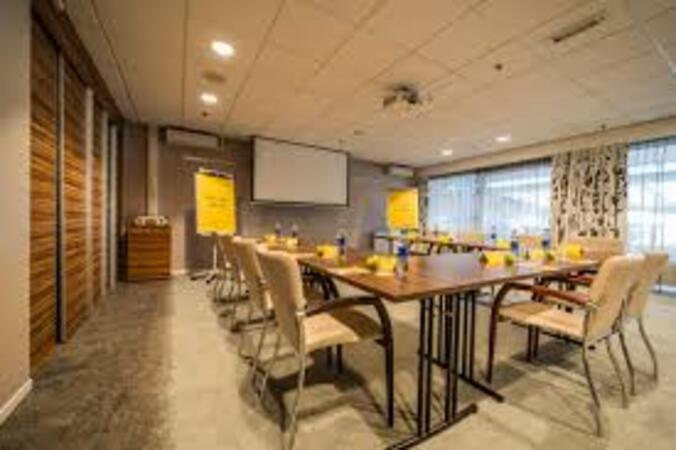
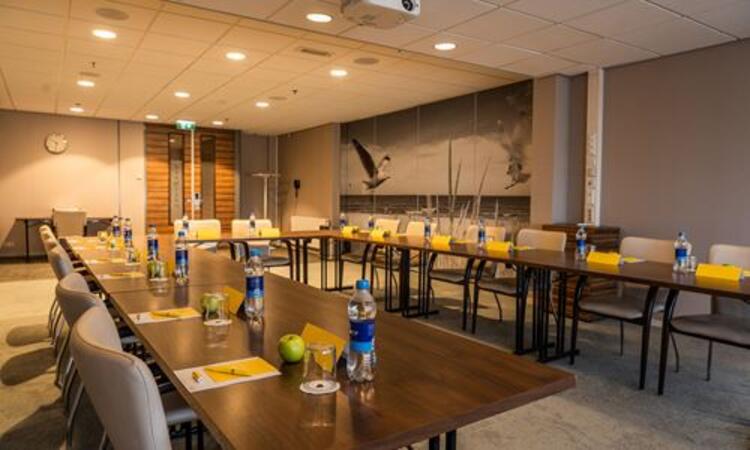
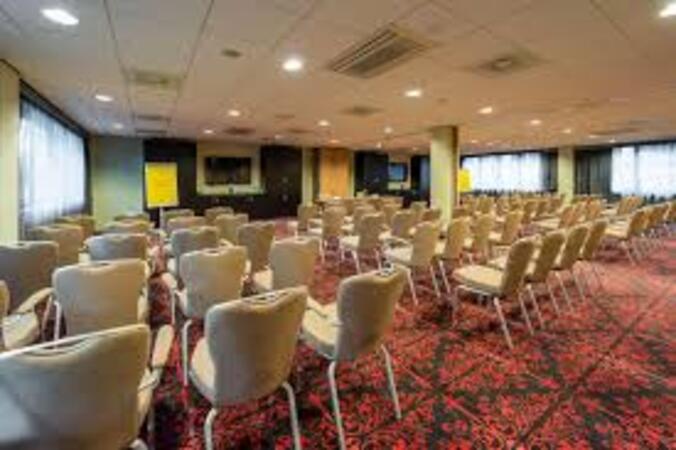
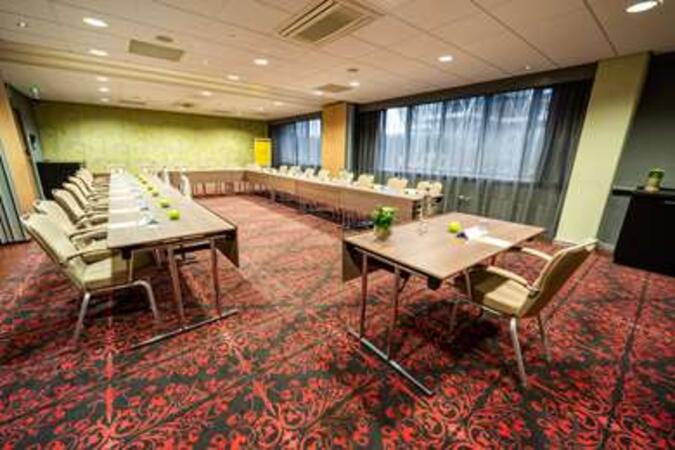
The 6 multifunctional rooms make Golden Tulip & Tulip Inn Leiden Center the ideal location for small and medium-sized meetings. The rooms have a capacity of 4 to 100 people. The meeting rooms offer countless possibilities in terms of setup and technical facilities. Convenience, efficiency, hospitality and professionalism are paramount. All rooms have air conditioning, free wireless internet and daylight.

Until the early 19th century, fishing in Noordwijk aan Zee remained the most important form of income. Later the population started to focus more and more on tourism. More than 1 million overnight stays take place every year. Noordwijk aan Zee consists of several districts and is located on the dunes. There are various catering establishments such as hotels, entertainment centers and restaurants (also on the beach) and there is a shopping center that has a Sunday opening. Every year events take place on the boulevard around the lighthouse on the Vuurtorenplein. The municipality has a KNRM rescue station and a reformed church (1647) with pulpit from the 17th century.
Since the merger with the Noordwijkerhout municipality, the municipality consists of four centers.
Noordwijk aan Zee, traditionally a fishing village, has become a seaside resort with a long coastal strip of approximately 13 km. . Noordwijk aan Zee has two boulevards, both of which are named after a queen, Queen Wilhelmina Boulevard and Queen Astrid Boulevard.
Noordwijk-Binnen radiates the tranquility of earlier centuries in the old core. In 1992 the old village center was designated as a protected village view under the Monuments Act.
Noordwijkerhout, a village and former municipality northeast of Noordwijk..Noordwijk aan Zee is rated as the 12th richest location in the Netherlands. Beer magnate Freddy Heineken has built a villa there with the characteristic green roof.
The Two Brothers Noordwijk Beach Hotel is located on the boulevard of Noordwijk with a view of the village and the sea and has several conference rooms and training rooms that make it the perfect place for business meetings and stimulating training. Noordwijk is a 30-minute drive from Amsterdam and The Hague and only 20 minutes from Leiden.
This instructor-led, live training in Leiden (online or onsite) is aimed at intermediate-level testers and developers who wish to deepen their knowledge and skills in automation testing, focusing on tools like Selenium, TestComplete, and integrating with Oracle APEX and .Net Core.
By the end of this training, participants will be able to:
Set up and configure Selenium and TestComplete for automation testing.
Develop advanced test scripts and frameworks.
Integrate automation testing with Oracle APEX and .Net Core applications.
Apply machine learning techniques to enhance test automation.
Transition from manual to automated testing effectively.
Manage outsourced testing projects and maintain quality standards.
This instructor-led, live training in Leiden (online or onsite) is aimed at intermediate-level to advanced-level test engineers and automation specialists who wish to explore advanced TestStand features and techniques for maximizing test automation efficiency and effectiveness.
By the end of this training, participants will be able to:
Utilize advanced features and functionalities of TestStand to enhance test automation workflows.
Customize user interfaces and develop advanced test sequences.
Implement advanced result processing and reporting techniques.
Integrate TestStand with external databases, systems, and hardware.
Apply best practices for maintaining, managing, troubleshooting, and debugging complex test sequences.
This instructor-led, live training in Leiden (online or onsite) is aimed at intermediate-level to advanced-level technical professionals who wish to use IDz and z/OS Connect to integrate mainframe applications with APIs and modernize legacy workflows.
By the end of this training, participants will be able to:
Set up and use IDz for mainframe application development.
Leverage z/OS Connect to expose mainframe applications as RESTful APIs.
Integrate COBOL, CICS, and DB2 programs with modern systems.
Implement best practices for API security and performance optimization.
Design Thinking is a human-centered methodology for solving problems through empathy, definition, ideation, prototyping, and testing. This version of the course places a strong emphasis on the Empathize stage, focusing on connecting previously identified pain points to the real needs of internal clients, and applying dynamic, collaborative activities to transform insights into actionable outcomes.
This instructor-led, live training (online or onsite) is aimed at beginner-level to intermediate-level teams and leaders who wish to deepen their empathy skills, strengthen relationships with internal clients, and translate pain points into meaningful opportunities for improvement.
By the end of this training, participants will be able to:
Apply empathy-based techniques to uncover and validate client needs.
Translate mapped pain points into clear, actionable needs.
Engage in dynamic role plays and simulations to practice client-centered conversations.
Collaboratively redefine problem statements from the client’s perspective.
Format of the Course
Interactive lecture and guided discussions.
Dynamic, hands-on role plays and empathy exercises.
Group workshops for collaborative problem reframing.
Course Customization Options
To request a customized version tailored to a specific internal process (e.g., procurement or equipment provisioning), please contact us to arrange.
This instructor-led, live training in Leiden (online or onsite) is aimed at experienced automation test engineers who want to learn advanced C# programming concepts for automation testing.
By the end of this training, participants will be able to:
Understand advanced C# programming concepts and best practices.
Apply advanced object-oriented programming principles to create efficient and flexible automation solutions.
Design and develop modular and reusable automation frameworks using industry best practices.
Jersey is the open source reference implementation of JAX-RS (Java API for RESTful Web Services). It provides libraries to build REST APIs in Java quickly and effectively. Combined with modern testing tools, Jersey enables developers to design, build, test, and document APIs efficiently.
This instructor-led, live training (online or onsite) is aimed at beginner-level to intermediate-level Java developers and testers who wish to learn API development and testing using Jersey and supporting tools.
By the end of this training, participants will be able to:
Set up a Jersey project with Maven.
Develop and deploy RESTful APIs using Jersey.
Test APIs using Postman and automated frameworks.
Handle errors, security, and documentation for APIs.
Format of the Course
Interactive lecture and discussion.
Hands-on exercises and practice.
Implementation in a live-lab environment.
Course Customization Options
To request a customized training for this course, please contact us to arrange.
Design Thinking is a human-centered methodology for solving problems through empathy, definition, ideation, prototyping and testing. Focusing on the first two stages — Empathize and Define — helps teams better understand internal clients and define the right problems to solve.
This instructor-led, live training (online or onsite) is aimed at beginner-level to intermediate-level teams and leaders who wish to strengthen their connection with internal clients, reduce resistance to change, and improve operational efficiency through practical, collaborative methods.
By the end of this training, participants will be able to:
Use active listening and interviewing techniques to gather meaningful insights about internal clients.
Create empathy maps and capture user needs and pain points.
Differentiate real root problems from perceived issues using tools like the 5 Whys and problem trees.
Draft clear, actionable problem statements (POVs) that guide solution work.
Format of the Course
Interactive lecture and discussion.
Practical, hands-on exercises and role-plays.
Group workshops and plenary feedback sessions.
Course Customization Options
To request a customized version tailored to a specific internal process (e.g., procurement or equipment provisioning), please contact us to arrange.
This instructor-led, live training in Leiden (online or onsite) is aimed at intermediate-level software developers and engineers who wish to effectively manage and troubleshoot software licenses in their organizations or projects.
By the end of this training, participants will be able to:
Grasp the basic concepts of software licensing and how FlexLM manages licenses.
Learn how to install the FlexLM server and client software on different operating systems.
Create, distribute, and manage licenses, including floating and node-locked licenses.
Identify and resolve common problems related to license installation, distribution, and usage.
The ISTQB Certified Tester Advanced Level – Test Automation Engineer (CTAL-TAE) is a globally recognized certification focused on designing, developing, and maintaining test automation solutions in real-world environments.
This instructor-led, live training (online or onsite) is aimed at intermediate-level to advanced-level software testers and automation professionals who wish to gain practical, exam-oriented knowledge aligned with the official CTAL-TAE syllabus and succeed in their certification exam.
By the end of this training, participants will be able to:
Understand the CTAL-TAE syllabus and certification objectives.
Design and implement scalable and maintainable test automation architectures.
Evaluate and select appropriate automation tools and frameworks.
Integrate automated tests into CI/CD pipelines.
Apply structured methods to plan, develop, and maintain automated test solutions.
Practice with exam simulations and gain familiarity with real test formats.
Format of the Course
Interactive lecture and discussion.
Lots of exercises and practice.
Hands-on implementation in a live-lab environment.
Course Customization Options
To request a customized training for this course, please contact us to arrange.
This instructor-led, live training in Leiden (online or onsite) is aimed at beginner-level to intermediate-level professionals who wish to understand and apply Design Thinking methodologies to drive innovation and improve business solutions.
By the end of this training, participants will be able to:
Understand the core principles of Design Thinking and its role in innovation.
Apply the five phases of Design Thinking to problem-solving.
Utilize ideation techniques and tools to foster creativity.
Implement Design Thinking strategies to improve processes and enhance efficiency.
This instructor-led, live training in Leiden (online or onsite) is aimed at professionals who wish to learn and understand the concept of software measurement and use it to estimate and size any software development process and productivity.
By the end of this training, participants will be able to:
Understand the use of software measurements and metrics in software development.
Track progress and assess productivity using the software metrics.
Analyze software measurement data for quality assurance and process improvement.
This instructor-led, live training in Leiden (online or onsite) is aimed at beginner-level to intermediate-level participants who wish to solve everyday workplace challenges through gamification techniques.
By the end of this training, participants will be able to:
Understand the principles of Design Thinking and its application to problem-solving.
Incorporate gamification techniques to foster engagement and innovation.
Develop creative and practical solutions to common workplace issues.
Collaborate effectively across teams to implement problem-solving strategies.
Apply iterative approaches to refine solutions through feedback and experimentation.
Domain-Driven Design (DDD) is an approach to software development that emphasizes designing systems around the business domain, using a shared ubiquitous language and tactical & strategic modeling techniques.
This instructor-led, live training (online or onsite) is aimed at advanced-level senior developers who wish to apply DDD principles to design robust, maintainable, and scalable systems.
By the end of this training, participants will be able to:
Identify and model core domain concepts using ubiquitous language and bounded contexts.
Apply tactical DDD patterns such as entities, value objects, aggregates, repositories, and domain services.
Design context maps and strategic boundaries to manage complexity across microservices and teams.
Integrate DDD practices into Agile teams and CI/CD workflows to improve collaboration and delivery.
Format of the Course
Interactive lecture and discussion.
Lots of exercises and practice.
Hands-on implementation in a live-lab environment.
Course Customization Options
To request a customized training for this course, please contact us to arrange.
This instructor-led, live training in Leiden (online or onsite) is aimed at professionals who wish to understand the concept of function point measurement and how to incorporate it into the software development productivity measurement.
By the end of this training, participants will be able to:
Understand function point and non-function point measurements in software development.
Measure the units of a software product for quality and productivity analysis.
This instructor-led, live training in Leiden (online or onsite) is aimed at developers and testers who wish to perform test automation using C# and Selenium.
By the end of this training, participants will be able to:
Install and configure Selenium WebDriver.
Write tests using Selenium, C#, and Nunit with Visual Studio IDE.
ISTQB Certified Tester Advanced Level – Test Manager (CTAL-TM) is a professional-level certification that focuses on advanced test management practices, leadership skills, and strategic decision-making aligned with the ISTQB syllabus.
This instructor-led, live training (online or onsite) is aimed at intermediate-level to advanced-level test managers and QA professionals who wish to master the ISTQB Advanced Level Test Manager syllabus and prepare for certification.
By the end of this training, participants will be able to:
Develop and manage comprehensive test strategies and plans.
Apply risk-based testing techniques to optimize testing efforts.
Monitor, control, and improve test processes within projects.
Lead and develop test teams while managing stakeholder expectations.
Utilize tools and metrics for test management, reporting, and continuous improvement.
Format of the Course
Interactive lecture and discussion.
Exam-oriented exercises and practice questions.
Hands-on case studies and simulations aligned with ISTQB CTAL-TM syllabus.
Course Customization Options
To request a customized training for this course, please contact us to arrange.
This instructor-led, live training in Leiden (online or onsite) is aimed at intermediate-level developers, architects, and analysts who wish to learn and apply DDD concepts and practices to their software projects.
By the end of this training, participants will be able to:
Grasp core DDD concepts (bounded contexts, entities, etc.) and their application in software projects.
Apply strategic DDD to define and design the domain model, identify subdomains, and establish boundaries.
Implement tactical DDD using patterns such as CQRS, factories, and event sourcing.
Refactor and modernize legacy systems effectively with DDD techniques.
Design and implement product, domain, and team-oriented architectures.
Utilize data mesh to create a domain-oriented data platform supporting data discovery and governance.
This instructor-led, live training in Leiden (online or onsite) is aimed at beginner-level leaders and HR professionals who wish to learn and apply Design Thinking methodologies to foster innovation, enhance problem-solving capabilities, and engage teams effectively.
By the end of this training, participants will be able to:
Equip participants with tools and methodologies to foster innovation and team engagement.
Develop skills in empathy mapping, ideation, and prototyping for solving complex challenges.
Apply Design Thinking principles to leadership and HR scenarios.
Promote a culture of innovation within tech teams.
This instructor-led, live training in Leiden (online or onsite) is aimed at intermediate-level Java developers who wish to apply design patterns to improve software structure, maintainability, and scalability.
By the end of this training, participants will be able to:
Understand the purpose and benefits of design patterns.
Apply Creational, Structural, and Behavioral patterns effectively in Java.
Improve code reusability, scalability, and maintainability.
Refactor existing codebases using design patterns.
This instructor-led, live training in Leiden (online or onsite) is aimed at operators and testers who wish to use EasyTest for testing applications or systems.
By the end of this training, participants will be able to:
Install and configure EasyTest.
Use EasyTest for testing systems and application features.
This instructor-led, live training in Leiden (online or onsite) is aimed at professionals who wish to learn how to use SNAP in project measurement and estimation.
By the end of this training, participants will be able to:
Learn about the SNAP and FPA rules and guidelines.
Be able to plan and estimate software projects better.
Understand process performance baselines and identify areas for process improvement.
Utilize SNAP to increase performance efficiency and obtain functional stability.
This course provides training for handling testing projects and provides hands on experience with web applications, functional test automation and cross browser test automation using Selenium test suite.
The target audience for this course is software test engineers and manual testers.
Upon completion of the training, participants will be able to effectively use Selenium WebDriver in real-world projects.
In this instructor-led, live training in Leiden, participants will learn how to enhance an automated test suite using advanced techniques to drive Selenium.
By the end of this training, participants will be able to:
Resolve complex web application test automation issues with Selenium.
Apply regular expressions and pattern-based verification techniques.
This instructor-led, live training in Leiden (online or onsite) introduces participants to automated testing with Selenium WebDriver and C# in Visual Studio. If you do not have C# programming experience or wish to brush up on C#, please check out the course: C# for Automation Test Engineers.
This instructor-led, live training in Leiden is designed for anyone interested in learning C# for the purpose of automation testing. It is a streamlined, intensive course with plenty of hands-on exercises to get participants ramped up quickly with the essential programming skills needed to apply in software automation testing. The focus is on the C# fundamentals which can be directly and immediately applied to test automation.
This course does not cover in depth test automation frameworks such as Selenium. If you are already versed in C# and wish to get straight into testing with Selenium, please check out: Selenium WebDriver in C#: Introduction to web testing automation in C#.
Automate software testing with HP UFT, the industry-standard functional testing tool. This test automation course covers recording-and-playback scripts, object identification, parameterized testing, reusable actions, web application testing, and API validation through hands-on labs. Learn to convert manual test cases into robust automated scripts, use checkpoints and synchronization, and build scalable test frameworks for enterprise-grade quality assurance workflows and regression testing.
The evolution of microservices and containers in recent years has significantly changed how we design, develop, deploy and run software. Modern applications must be optimized for scalability, elasticity, failure, and change. Driven by these new demands, modern architectures require a different set of patterns and practices. In this training, we examine ways to identify, understand and adjust to these new requirements.
Audience
This training is intended for people who are somewhat familiar with container technology and with Kubernetes concepts but are perhaps lacking the real world experience. It is based on use cases, and lessons learnt from real life projects with the intention of making people inspired to create and manage even better cloud native applications.
Developers
Operations
DevOps
QA Engineers
IT Project Managers
Format of the Course
Interactive lecture and discussion
Lots of exercises and practice
Handson implementation in a live-lab environment
Course Customization Options
To request a customized training for this course, please contact us to arrange.
Master mobile automation testing with this comprehensive Appium training course. Build powerful test automation frameworks for Android and iOS mobile apps using the industry-leading Appium framework gained hands-on experience configuring Appium, writing test scripts, identifying native and web elements, and generating detailed test reports. Ideal for QA engineers and testing professionals adding mobile testing and automation skills to their toolkit. Perfect starting point for Appium certification and career advancement in mobile quality assurance.
Selenium is an open-source framework for automating web application testing across different browsers. With Selenium 4, enhanced WebDriver APIs, native relative locators, and improved grid support are available. Python offers simplicity and strong integration with testing frameworks like Pytest, making it a powerful choice for developing scalable and maintainable test automation suites.
This instructor-led, live training (online or onsite) is aimed at beginner-level to intermediate-level testers and developers who wish to use Selenium with Python to automate web application testing in real-world environments.
By the end of this training, participants will be able to:
Install and configure Selenium with Python in a test environment.
Build robust test automation scripts using Selenium WebDriver and Pytest.
Apply Page Object Model (POM) for maintainable test frameworks.
Run tests across multiple browsers using Selenium Grid.
Integrate automated tests with CI/CD pipelines.
Troubleshoot common issues and apply best practices for automation stability.
Format of the Course
Interactive lecture and discussion.
Lots of exercises and practice.
Hands-on implementation in a live-lab environment.
Course Customization Options
To request a customized training for this course, please contact us to arrange.
This instructor-led, live workshop in Leiden begins with an introduction to BDD, what it is and how it is used by companies to promote good software design, development and testing. We do this from a non-engineering point-of-view, with an eye on the end-users, their requirements, language, and way of thinking. We also address the communication challenges that business stakeholders are likely to encounter as they work closer with their technical-minded peers.
By the end of this training, participants will know how to:
Write succinct user stories that capture the usage patterns of real users of the software.
Translate their user stories into the behavioral language of BDD (Given, When, Then.)
Derive test cases from these stories, for use by engineers to implement and test.
Understand the relationship between product requirements, acceptance criteria, and test cases.
Demystify the technical jargon that impedes communication and understanding.
Install and use great tools for writing BDD feature files.
Understand and appreciate what happens once the work is handed to engineers.
Play a more active role in the iterative development cycle.
Domain Driven Design (DDD) is a powerful software development approach that focuses on modeling complex software behaviors by aligning technical implementation with core business concepts. This course explores how DDD helps teams manage complexity and reduce risk through strategic and tactical patterns. Participants will learn to build a "Ubiquitous Language," define clear boundaries through Bounded Contexts, and use specific building blocks like Entities, Value Objects, and Aggregates. The goal is to create flexible, maintainable software architectures that remain consistent with the evolving business domain.
There are plenty of tried and tested patterns widely available to everyone. Sometimes it is a matter of changing the names and implementing the pattern in a specific technology. It can save hundreds of hours, which otherwise would be spent on design and testing. Training Goals This course has two goals: first, it allows you to reuse widely-known patterns, second, it allows you to create and reuse patterns specific to your organization. It helps you to estimate how patterns can reduce costs, systematize the design process and generate a code framework based on your patterns. Audience Software designers, business analysts, project managers, programmers and developers as well as operational managers and software division managers. Course Style The course focuses on use cases and their relationship with a specific pattern. Most of the examples are explained in UML and in simple Java examples (the language can change if the course is booked as a closed course). It guides you through the sources of the patterns as well as showing you how to catalogue and describe patterns which can be reused across your organization.
In this instructor-led, live workshop training in Leiden (online or onsite), participants will learn how to apply the five stages of Design Thinking to better understand the problems experienced by end-users of a product or service, then develop the best approach for resolving them.
By the end of this training, participants will be able to:
Use creative strategies to match customers' needs with technologically feasible solutions.
Formulate a strategy to increase customer value and enhance product and service offerings.
There are Five stages in the Design Thinking (DT) process (empathize, define the problem, ideate, prototype, test).
In an increasingly complex world, we deal with problems that may need special approaches. Design Thinking helps deal with complex problems. Mastering design-thinking helps to deal with complex problems effectively, communicate better, persuade efficiently, improve business results and enhances organizational and personal behavior and performance.
How DT works: learn from people and problem, find patterns, design model (model drift), test the model, evaluate the model and re-engineer.
Relationship between DT, innovation and entrepreneurship.
DT methods and tools: persona, stakeholder map, customer journey map, service blueprint, business model innovation.
Application of DT: design mindset, disruptive innovation, iterative approach, agile estimation technique, critical thinking, problem solving, teamwork, leadership readiness, communication skills, technology savvy, forward thinking, intercultural and ethical competency, emotional intelligence, self-awareness, negotiating skills, conflict resolution.
Objectives:
To understand the fundamentals and nuances of DT
To explore key concepts, factors, theories, types, and models in DT
To experiment, experience and practice DT
Delivery:
This is a 1 day (4 hours) training course and consists of:
lectures (40% - presentation of theories, concepts, models, and interactions),
group exercises (30% - group dynamics, games, group discussion, and mock-conflict resolution exercises),
individual activities (15% - writing, designing and peer discussion)
and others (15% - videos, reading).
Note: due to the nature of this course there is a minimum group size of 3
This instructor-led, live training in Leiden (online or onsite) is aimed at intermediate-level PHP developers who wish to apply design patterns effectively in their projects.
By the end of this training, participants will be able to:
Understand the purpose and benefits of design patterns.
Identify and implement appropriate design patterns for common scenarios.
Structure PHP applications using industry-recognized best practices.
Integrate patterns into modern frameworks such as Symfony or Zend.
Fundamentals of QA and Modern Testing with AI is a comprehensive training program that combines the ISTQB Certified Tester Foundation Level (CTFL v4.0) syllabus with a practical introduction to AI-assisted testing tools and techniques. This course is designed as a preparation pathway toward the ISTQB Foundation Level certification while equipping participants with immediately applicable AI-assisted testing skills.
This instructor-led, live training (online or onsite) is aimed at QA professionals, software testers, and test engineers who wish to build a structured understanding of quality assurance fundamentals while learning to leverage modern AI tools for test case generation, test automation, and defect analysis.
By the end of this training, participants will be able to:
Apply the seven testing principles and the tester's role across the software development lifecycle.
Design test cases using black-box, white-box, and experience-based techniques per ISTQB standards.
Report, track, and manage defects through their full lifecycle.
Plan testing using risk-based approaches, estimation techniques, and test progress metrics.
Evaluate and select test automation tools for your organizational context.
Use generative AI and LLMs to draft, review, and refine test cases from requirements.
Apply AI-powered tools for self-healing test automation, visual regression testing, and defect prediction.
Navigate the ISTQB Foundation Level exam structure and answer sample questions confidently.
Format of the Course
Interactive lecture and discussion.
Lots of exercises and practice.
Hands-on implementation in a live-lab environment.
Course Customization Options
To request a customized training, please contact us to arrange.
The training is designed for JavaScript developers, designing and implementing advanced Internet applications. Topics discussed during the training aimed at bringing best practices in JavaScript programming and highlight the most common mistakes. An important point of the training is to discuss the available object-oriented programming with JavaScript syntax.
Kubernetes is an open-source platform for automating all development stages of containerized applications. Design patterns are iterable solutions to software development problems pertinent to software design. Kubernetes extensions are utilized for configuring and supporting Kubernetes clusters. With the help of Kubernetes design patterns and extensions, users of the platform can achieve CI/CD approaches while maintaining scalability and flexibility of software applications.
This instructor-led, live training (online or onsite) is aimed at developers and DevOps engineers who wish to leverage Kubernetes design patterns and extensions to create enterprise applications on Kubernetes clusters.
By the end of this training, participants will be able to:
Set up a Kubernetes cluster and configure the necessary DevOps tools.
Understand the fundamentals of software design patterns and Kubernetes extensions.
Utilize Kubernetes extensions and design patterns when interacting with Kubernetes API.
Develop customized Kubernetes resources and apply dynamic controllers to a cluster.
Manage and secure any Kubernetes environment with the help of Kubernetes plugins.
Integrate DevOps networking models to existing and prospective Kubernetes projects.
Format of the Course
Interactive lecture and discussion.
Lots of exercises and practice.
Hands-on implementation in a live-lab environment.
Course Customization Options
To request a customized training for this course, please contact us to arrange.
Microservice architecture is an approach to developing a software application as a suite of small, independent services, each running in its own process and communicating with lightweight mechanisms such as an HTTP resource API. These services can be efficiently deployed using continuous automation systems and bypass the need for centralized management. Microservices can be written in different programming languages and integrate with different data storage systems.
This instructor-led, live training is aimed at enterprise developers and architects. It introduces microservice architecture from a .Net perspective, presents migration strategies from a monolithic system, and walks participants through the creation and deployment of a sample microservice-based application.
By the end of this training, participants will be able to:
Understand when to use and when not to use microservice architecture
Create and implement a testing strategy for microservices
Deploy a sample microservice-based application into a production environment
Refactor a monolithic application into services
Audience
Developers
Architects
Format of the course
Part lecture, part discussion, exercises and heavy hands-on practice
The course is designed for experienced programmers who want to explore issues related to the use of patterns and refactoring. Each participant know the properties and practical examples of the use of these patterns, which in turn will enable the efficient build correct the application code.
With the emergence of very complex distributed systems, complexity of a single system moved to the complexity of the architecture of the group of systems. This course covers the relationship of Software Architecture with Technical Enterprise Architecture. These two areas are interrelated in a way which currently is not well described. For example, splitting complex monolithic system into two systems communicating via web services will trigger substantial changes to both the new systems, and the architecture between them.
This course will cover trade-offs, currently common patterns and solutions for managing complex systems and communication within and between them.
In this instructor-led, live training in Leiden, participants will learn how to use TestComplete's features, including its test object model, check points, name mapping, and UI to carry out automated testing on desktop, web, and mobile applications.
By the end of this training, participants will be able to:
Create, record and run functional tests.
Create a scalable and maintainable test framework.
Create checkpoints, adjust tests for multiple devices and analyze test results.
This training course is for all people working in or with high-performance IT delivery teams (such as DevOps and Scrum) that are responsible for or heavily involved in quality engineering such as QA professionals, testers and operations people. Other relevant roles include business analysts, product owners, developers, quality engineers, users, scrum masters, agile coaches, release train engineers, etc.
In today’s IT world cross-functional teams are expected to deliver business value with the right quality at speed. TMAP® supports this new way of working towards built-in quality which goes beyond just testing.
Performing QA & testing activities in an organization requires a wide variety of knowledge and skills. This training course enables professionals to perform these operational activities.
This course includes the cost of the TMAP® High-performance quality engineering exam voucher. The exam is taken in collaboration with iSQI. With this voucher the exam can be scheduled on a date and location of your choice.
The internationally recognised TMAP® High-performance quality engineering certification confers and attests to the knowledge and skills that are essential for any individual responsible for or heavily involved in quality engineering.
This training course is for all people that are involved in organizing high-performance IT delivery (such as DevOps and Scrum). This includes roles such as scrum masters, agile coaches, release train engineers, test managers, test masters.
Other relevant roles include QA professionals, testers, business analysts, product owners, developers, quality engineers, users, operations people etc.
In today’s IT world cross-functional teams are expected to deliver business value with the right quality at speed. TMAP® supports this new way of working towards built-in quality which goes beyond just testing.
Organizing QA & testing requires orchestrating, arranging, planning, preparing and controlling the activities. This training course enables professionals that are responsible for organizing QA & testing to acquire necessary knowledge and skills to enable teams to achieve quality ownership.
This course includes the cost of the TMAP® Organizing built-in quality at scale exam voucher. The exam is taken in collaboration with iSQI. With this voucher the exam can be scheduled on a date and location of your choice.
With the TMAP: Organizing built-in quality at scale:
You will have an independent, internationally recognised certification as proof of expertise in the field of QA and testing
You will learn about IT delivery models, especially DevOps, and the whole-team approach and relevance for Dev and Ops people
You will have the opportunity to gain further certificates
This training course provides all people in a high-performance IT delivery team, such as a DevOps or Scrum team, with the required knowledge and skills that are important for building quality in their IT system and gaining confidence that the pursued business value can be achieved.
On the last afternoon of this training course the participants take the 1-hour exam with 30 questions, “TMAP: Quality for cross-functional teams”. The exam is taken in collaboration with iSQI
The internationally recognised TMAP: Quality for cross-functional teams certification attests all people in a high-performance IT delivery team, such as in DevOps or Scrum, the required knowledge and skills that are important for building quality in their IT system and gaining confidence that the pursued business value can be achieved.
The Principal Engineer - Masterclass is for experienced and motivated engineers who already know how to ship production-ready code. This course will make you an exceptional software engineer/leader to make a big positive impact on your team and organization. In this course, you'll learn about System design and architecture, code reviewing techniques, mentoring and coaching engineers, pair programming, building strong engineering culture and other fundamentally important engineering practices.
This instructor-led, live training (onsite or remote) is aimed at:
mid-level software engineer
senior software engineer
principal software engineer
staff software engineer
lead software engineer
software architect
engineering managers
By the end of this training, participants will be able to:
Promote to next level from mid-level or senior engineers
If they are already leading a team or above senior engineers, they can start using tools, techniques and framework learnt from this course to:
effectively lead high performing engineering teams
360° effective collaboration with all stakeholders
expertize core technical skills of a principal engineer
fostering strong engineering culture within the organization
master continuous learning attitude
Format of the Course
Interactive lecture and discussion.
Lots of exercises and practice.
Tools, techniques and framework to become a unicorn engineer
Real-life experience sharing
Course Customization Options
To request a customized training for this course, please contact us to arrange.
Online Software Engineering training in Leiden, Software Engineering training courses in Leiden, Weekend Software Engineering courses in Leiden, Evening Software Engineering training in Leiden, Software Engineering instructor-led in Leiden, Software Engineering trainer in Leiden, Software Engineering boot camp in Leiden, Online Software Engineering training in Leiden, Evening Software Engineering courses in Leiden, Software Engineering one on one training in Leiden, Software Engineering private courses in Leiden, Software Engineering coaching in Leiden, Software Engineering instructor-led in Leiden, Software Engineering on-site in Leiden, Software Engineering classes in Leiden, Weekend Software Engineering training in Leiden, Software Engineering instructor in Leiden