The AI for Robotics course marks the convergence of intelligence and movement—where algorithms process information, sensors gather data, and machines execute actions with intent. It is the cutting edge where information turns into physical skill, fueling the future wave of autonomous systems, industrial robotics, and smart machinery.
In these instructor-led training sessions, participants examine how artificial intelligence shifts robotics from static tools to adaptive, learning entities. Through practical exercises, they delve into perception models, motion planning, reinforcement learning, and AI-driven control architectures that bring machines closer to human-like responsiveness.
Online learners enter a setting that replicates the tempo of real laboratories—guided step by step through live demonstrations and collaborative coding via an interactive remote desktop. Each session unfolds as a shared exploration of logic and motion, not a one-way lecture.
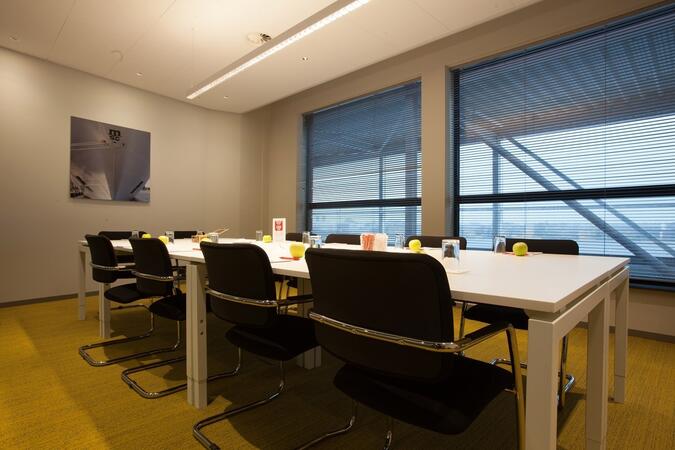
For teams that prefer to build and test side by side, onsite training in Amsterdam—held at customer sites or within NobleProg corporate facilities—turns learning into experimentation. Robots, code, and creativity come together in a practical environment where theory takes physical form.
Also known as Robotics AI or Intelligent Robotics, our training helps professionals bridge software and mechanics—building systems that sense, decide, and act with increasing autonomy and precision.
NobleProg — Your Local Training Provider
Amsterdam
The Office Operators - UP Office Building, Piet Heinkade 55, Amsterdam, Netherlands, 1019 GM
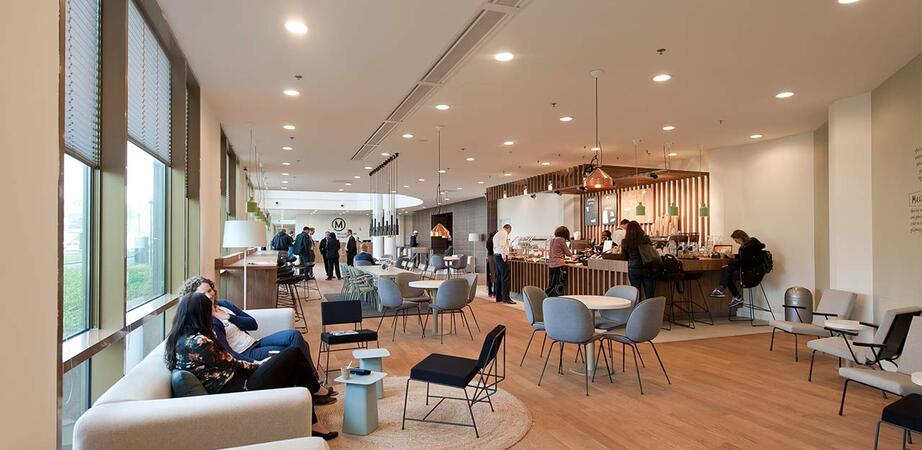
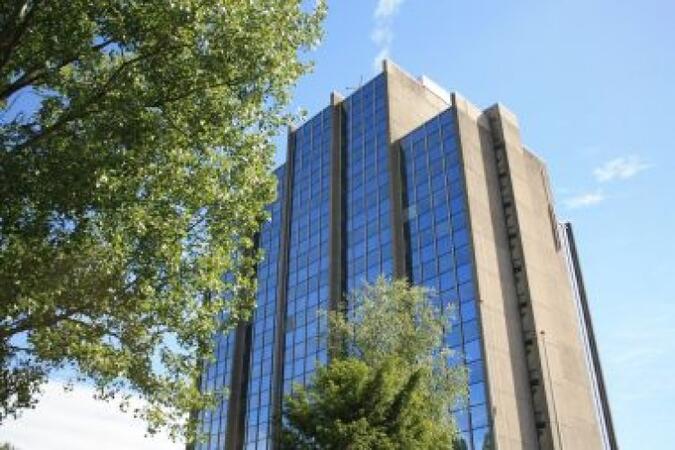
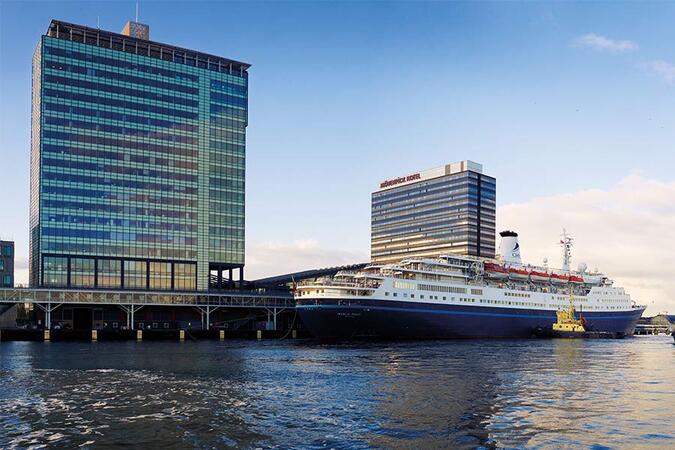
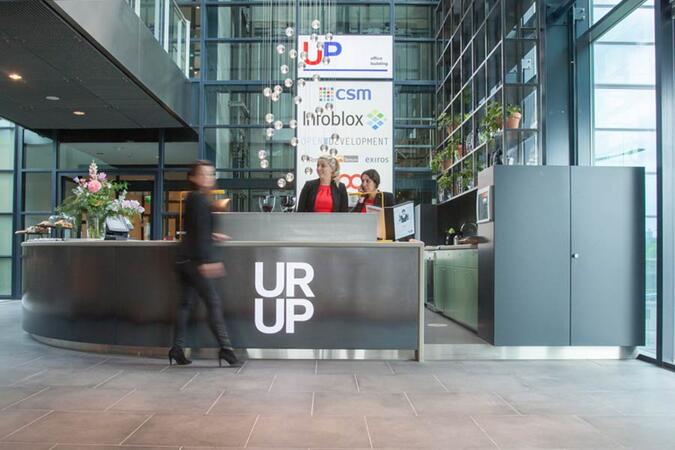
The UP office building is located in central Amsterdam on the south bank of the IJ near the city’s main railway station. UP was built in 2002 and has been recently converted into a multi-tenant office building with shared facilities such as a new lobby with coffee bar, a restaurant on the 17th floor and meeting rooms. The building is part of a complex consisting of the Passenger Terminal Amsterdam (cruise ships), the Mövenpick Hotel and concert hall Muziekgebouw aan ’t IJ. There is a two-floor car park underneath the complex with a separate entrance for the UP office building. As the tallest building in the neighbourhood, the UP complex is a river front landmark. All 21 storeys offer a spectacular view over Amsterdam and the IJ.
The UP Office building is perfectly located in the city centre of Amsterdam.
Public transport
UP is only a 12 minutes’ walk from Amsterdam Central Station. Or take tram 26 towards IJburg and get off at the first stop Muziekgebouw Bimhuis. This stop is located in front of the entrance of the UP Office Building.
By car
And by car you take A10 exit S114 and after approximately 1 kilometer and you will find the UP Office Building on your right. There is a parking space under the UP Office Building in the Piet Hein garage.
Zuidas
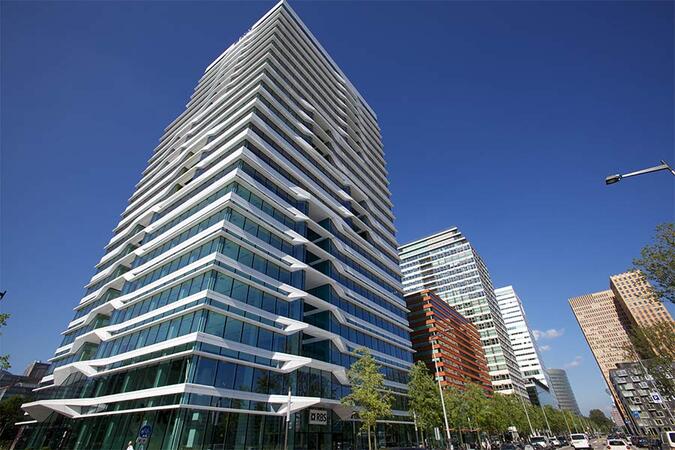
The Office Operators - Amsterdam Zuidas - UN Studio, Parnassusweg 819, Amsterdam, Netherlands, 1082 LZ
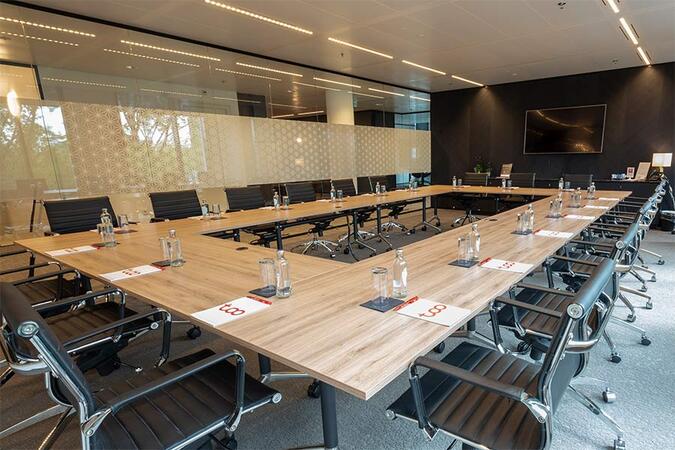
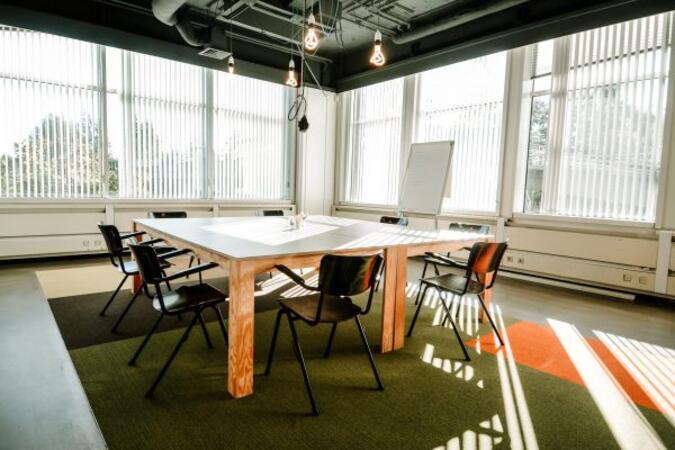
Our training location in Amsterdam Zuidas WTC has 10 different rooms of various sizes available.
Meeting location Amsterdam ZuidAs WTC is easily accessible by public transport and is within walking distance of train, bus and metro station "Amsterdam South". The WTC Amsterdam building is also easily accessible by car. The meeting & conference center is a stone's throw from the A10 ring road and the WTC Amsterdam parking garage offers ample parking spaces for you and your guests.
The nearby Amsterdam WTC Station also offers direct connections to Belgium, France and Germany.
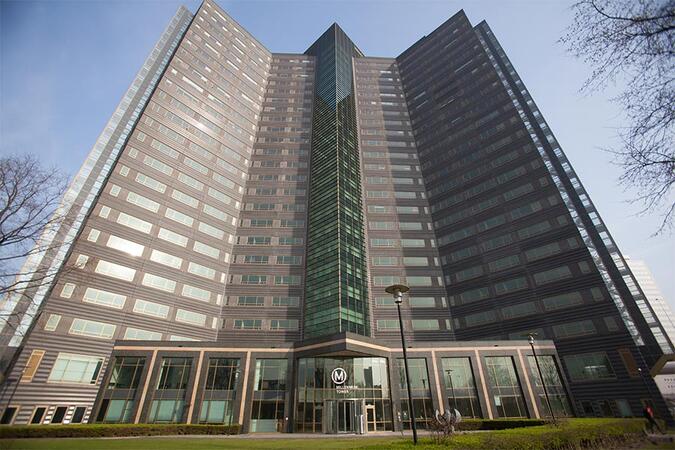
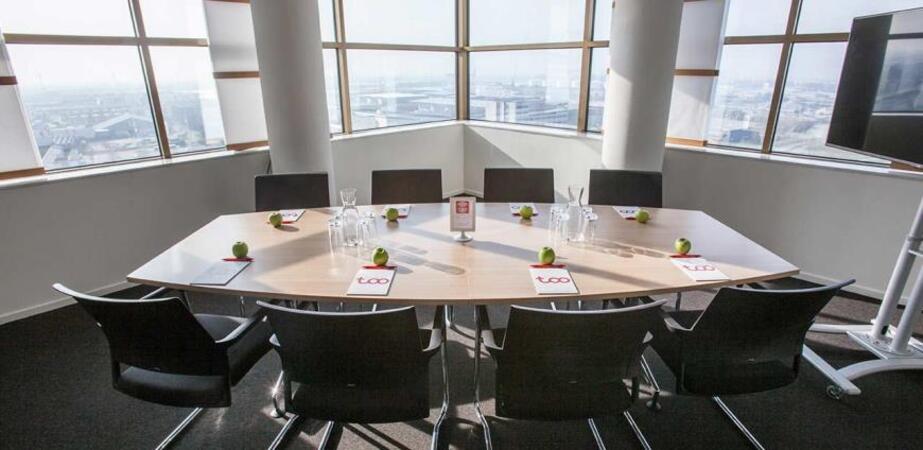
Are you looking for a training course of the business district of Amsterdam Sloterdijk? The Millennium Tower is an excellent choice! It’s inspired on the painting ‘ Victory Boogie Woogie’ and is one of the highest buildings of Amsterdam. This explains the amazing view you will have from your training room.
There is a extensive restaurant at the ground floor of the Millennium Tower. Here you can enjoy a delicious lunch with your colleagues and business partners. Not so hungry? The downstairs gym offers you the perfect opportunity to stay healthy and work on your abs during your lunch break!
The business center of the Millennium Tower develops quickly and is easy accessible by car and by train for you.
This office space is located next to highways A5 and A10 and train station ‘Amsterdam Sloterdijk‘ is within walking distance.
Amstelveen
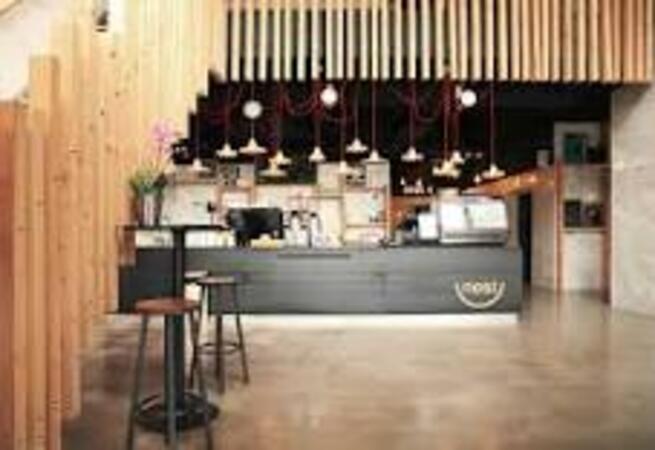
Amstelveen NEST, Laan van Kronenburg 14, Amstelveen, Netherlands, 1183 AS
In the early 20th century, Amstelveen was a simple rural village where time stood still. The village was somewhat remote because it had no major rail or water connections. The main source of income was livestock farming with some arable farming, but horticulture and floriculture were already emerging at that time.
In 1852 the Haarlemmermeerpolder was drained and the 'Fort aan Schiphol' was constructed as a defense work for the capital Amsterdam. Fort Schiphol, as it was later called, a military airport was founded in 1916, Schiphol, which became a civilian airport four years later. Fort Schiphol was demolished in 1934, the location is still visible in the wide area of the Ringvaart under the viaduct of the A-9. Schiphol's development attracted many people, many of whom settled in Amstelveen. KLM headquarters were also located here. Amstelveen became the fastest growing municipality in the Netherlands.
After the Second World War, Amstelveen absorbed part of the Amsterdam housing shortage and officially became one of the residential areas of Schiphol. In addition to housing, many offices have also been converted in recent decades; built especially for the commercial, banking and insurance industries. It has large computer centers and head offices for national and international institutions. Many people who work at Schiphol Airport live here. Nest Amstelveen is bustling! No less than 260 different companies and entrepreneurs have moved here.
Nest creates places that help people and companies to successfully do business and develop. NobleProg gratefully uses this dynamic environment.
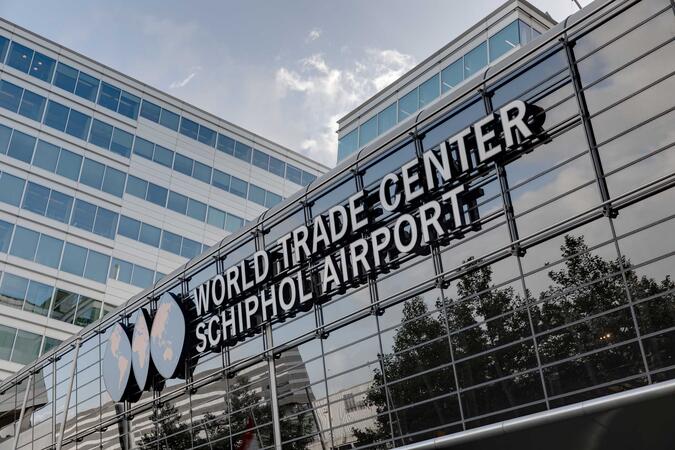
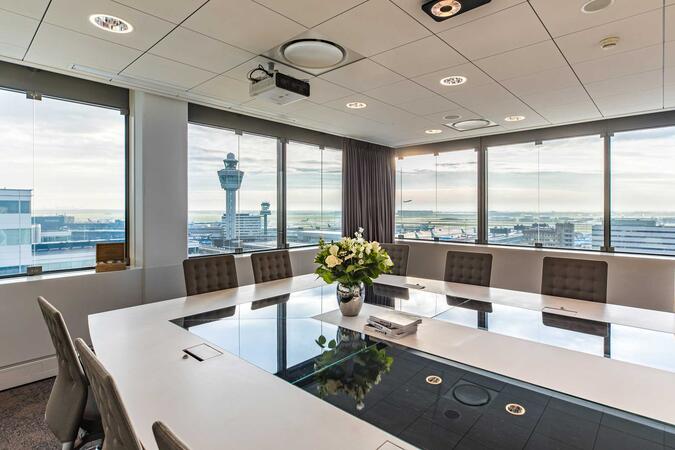
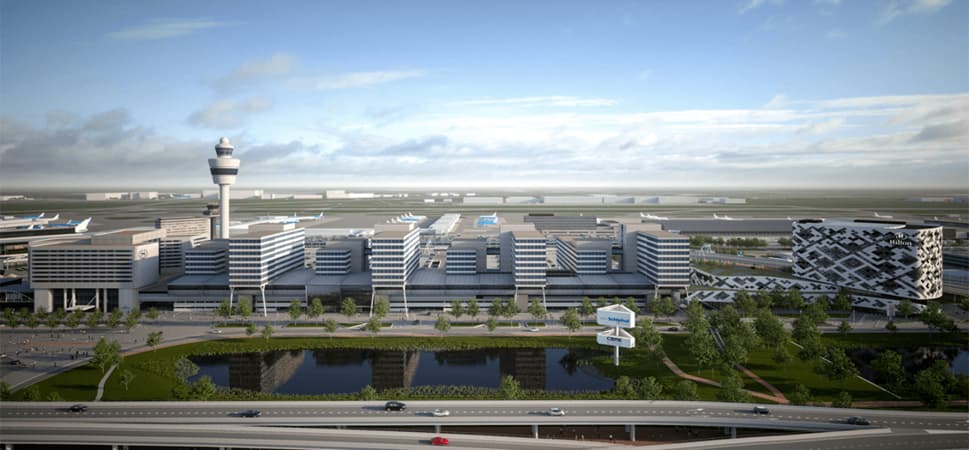
Trainings only 5 minutes away from the arrivals and departures hall! WTC Schiphol is the most international training place for both domestic and foreign participants.
WTC Schiphol Airport is the location for major brands, internationally oriented companies and driven entrepreneurs and offers direct access to the airport.
Within minutes you can walk from your training location to the Terminal of Schiphol Airport, the second hub airport in the world.
Schiphol airport is easily accessible both by car and by public transport and has plenty of parking opportunities.
.
This hands-on course, 'Practical Rapid Prototyping for Robotics with ROS 2 & Docker', is designed to equip developers with the skills to efficiently build, test, and deploy robotic applications. Participants will gain expertise in containerizing robotics environments, integrating ROS 2 packages, and creating modular robotic systems using Docker to ensure reproducibility and scalability. The curriculum highlights agility, version control, and collaborative practices ideal for innovation teams in the early stages of development.
This instructor-led live training (available online or onsite) targets beginner to intermediate participants looking to streamline their robotics development workflows through the use of ROS 2 and Docker.
Upon completion, participants will be able to:
Establish a ROS 2 development environment within Docker containers.
Create and test robotic prototypes in modular, reproducible setups.
Utilize simulation tools to verify system performance prior to hardware deployment.
Collaborate effectively via containerized robotics projects.
Implement continuous integration and deployment principles in robotics pipelines.
Course Format
Interactive lectures and demonstrations.
Practical exercises involving ROS 2 and Docker environments.
Mini-projects centred on real-world robotic applications.
Customization Options
For customized training requests, please contact us to arrange your session.
The Human-Robot Interaction (HRI): Voice, Gesture & Collaborative Control programme is a practical course designed to familiarise participants with the design and implementation of intuitive interfaces for effective human–robot communication. This training integrates theory, design principles, and hands-on programming to create natural and responsive interaction systems utilizing speech, gestures, and shared control techniques. Participants will gain the skills to integrate perception modules, develop multimodal input systems, and design robots that collaborate safely with humans.
This instructor-led live training (available online or onsite) targets beginner to intermediate-level participants who wish to design and implement human–robot interaction systems that improve usability, safety, and overall user experience.
Upon completion of this training, participants will be able to:
Grasp the foundational concepts and design principles underpinning human–robot interaction.
Develop voice-based control mechanisms and response systems for robots.
Implement gesture recognition using computer vision techniques.
Design collaborative control systems that ensure safe shared autonomy.
Evaluate HRI systems against criteria of usability, safety, and human factors.
Course Format
Interactive lectures accompanied by live demonstrations.
Hands-on coding and design exercises.
Practical experiments conducted in simulation or real robotic environments.
Course Customization Options
To request a tailored training session for this course, please get in touch with us to make arrangements.
Industrial Robotics Automation: ROS-PLC Integration & Digital Twins is a practical course designed to bridge the gap between industrial automation and modern robotics frameworks. Participants will learn how to integrate ROS-based robotic systems with PLCs for synchronized operations, while exploring digital twin environments to simulate, monitor, and optimize production processes. The course emphasizes interoperability, real-time control, and predictive analysis using digital replicas of physical systems.
This instructor-led, live training (available online or onsite) targets intermediate-level professionals who wish to build practical skills in connecting ROS-controlled robots with PLC environments and implementing digital twins for automation and manufacturing optimization.
By the end of this training, participants will be able to:
Understand communication protocols between ROS and PLC systems.
Implement real-time data exchange between robots and industrial controllers.
Develop digital twins for monitoring, testing, and process simulation.
Integrate sensors, actuators, and robotic manipulators within industrial workflows.
Design and validate industrial automation systems using hybrid simulation environments.
Format of the Course
Interactive lecture and architecture walkthroughs.
Hands-on exercises integrating ROS and PLC systems.
Simulation and digital twin project implementation.
Course Customization Options
To request a customized training for this course, please contact us to arrange.
This advanced course bridges the gap between robotic control and contemporary machine learning methodologies. Participants will investigate how deep learning can improve perception, motion planning, and dexterous grasping capabilities within robotic systems. By combining theoretical knowledge with simulation and practical coding assignments, the curriculum guides learners from perception-based control strategies toward end-to-end policy learning for complex manipulation tasks.
Delivered as an instructor-led live training session (available online or onsite), this program is designed for advanced professionals seeking to implement deep learning techniques to achieve intelligent, adaptable, and precise robotic manipulation.
Upon completion of this training, participants will be able to:
Construct perception models for object recognition and pose estimation.
Train neural networks focused on grasp detection and motion planning.
Integrate deep learning modules with robotic controllers utilizing ROS 2.
Simulate and assess grasping and manipulation strategies within virtual environments.
Deploy and optimize learned models onto actual or simulated robotic arms.
Course Format
Expert-led lectures with in-depth algorithmic analysis.
Practical coding and simulation exercises.
Project-based implementation and testing phases.
Course Customization Options
To request a customized version of this course, please contact us to make arrangements.
Multi-Robot Systems and Swarm Intelligence is an advanced training course that delves into the design, coordination, and control of robotic teams inspired by biological swarm behaviors. Participants will acquire the skills to model interactions, implement distributed decision-making, and optimize collaboration across multiple agents. The curriculum integrates theoretical foundations with practical simulation exercises, preparing learners for applications in logistics, defense, search and rescue, and autonomous exploration.
This instructor-led live training (available online or onsite) is designed for advanced-level professionals aiming to design, simulate, and implement multi-robot and swarm-based systems using open-source frameworks and algorithms.
Upon completion of this training, participants will be able to:
Grasp the principles and dynamics of swarm intelligence and cooperative robotics.
Develop communication and coordination strategies for multi-robot systems.
Implement distributed decision-making and consensus algorithms.
Simulate collective behaviors such as formation control, flocking, and coverage.
Apply swarm-based techniques to real-world scenarios and optimization problems.
Format of the Course
Advanced lectures featuring algorithmic deep dives.
Hands-on coding and simulation using ROS 2 and Gazebo.
A collaborative project applying swarm intelligence principles.
Course Customization Options
To request a customized training for this course, please contact us to arrange.
TinyML represents a framework designed to deploy machine learning models onto low-power microcontrollers and embedded platforms utilized in robotics and autonomous systems.
This instructor-led, live training (available online or onsite) is tailored for advanced-level professionals seeking to incorporate TinyML-driven perception and decision-making capabilities into autonomous robots, drones, and intelligent control systems.
Upon completing this course, participants will be able to:
Design optimized TinyML models specifically for robotics applications.
Implement on-device perception pipelines to enable real-time autonomy.
Integrate TinyML solutions into existing robotic control frameworks.
Deploy and test lightweight AI models on embedded hardware platforms.
Format of the Course
Technical lectures combined with interactive discussions.
Hands-on labs focusing on embedded robotics tasks.
Safe & Explainable Robotics is a comprehensive training focused on the safety, verification, and ethical governance of robotic systems. The course bridges theory and practice by exploring safety case methodologies, hazard analysis, and explainable AI approaches that make robotic decision-making transparent and trustworthy. Participants will learn how to ensure compliance, verify behaviors, and document safety assurance in line with international standards.
This instructor-led, live training (online or onsite) is aimed at intermediate-level professionals who wish to apply verification, validation, and explainability principles to ensure the safe and ethical deployment of robotic systems.
By the end of this training, participants will be able to:
Develop and document safety cases for robotic and autonomous systems.
Apply verification and validation techniques in simulation environments.
Understand explainable AI frameworks for robotics decision-making.
Integrate safety and ethics principles into system design and operation.
Communicate safety and transparency requirements to stakeholders.
Format of the Course
Interactive lecture and discussion.
Hands-on simulation and safety analysis exercises.
Case studies from real-world robotics applications.
Course Customization Options
To request a customized training for this course, please contact us to arrange.
Edge AI allows artificial intelligence models to execute directly on embedded or resource-constrained devices, which reduces latency and power consumption while enhancing autonomy and privacy in robotic systems.
This instructor-led live training (available online or onsite) targets intermediate-level embedded developers and robotics engineers who want to implement machine learning inference and optimization techniques directly onto robotic hardware using TinyML and edge AI frameworks.
Upon completion of this training, participants will be able to:
Grasp the fundamentals of TinyML and edge AI for robotics.
Convert and deploy AI models for on-device inference.
Optimize models to improve speed, reduce size, and enhance energy efficiency.
Integrate edge AI systems into robotic control architectures.
Evaluate performance and accuracy in real-world scenarios.
Course Format
Interactive lecture and discussion.
Hands-on practice using TinyML and edge AI toolchains.
Practical exercises on embedded and robotic hardware platforms.
Course Customization Options
To request a customized training for this course, please contact us to arrange.
This instructor-led live training in Amsterdam (online or onsite) is designed for intermediate-level participants eager to explore the role of collaborative robots (cobots) and other human-centric AI systems in contemporary workplaces.
By the end of this training, participants will be able to:
Grasp the core principles of Human-Centric Physical AI and its practical applications.
Examine how collaborative robots contribute to enhancing workplace productivity.
Identify and tackle challenges inherent in human-machine interactions.
Design workflows that optimize collaboration between humans and AI-driven systems.
Foster a culture of innovation and adaptability within AI-integrated workplaces.
Reinforcement learning (RL) is a machine learning paradigm where agents learn to make decisions by interacting with an environment. In robotics, RL enables autonomous systems to develop adaptive control and decision-making capabilities through experience and feedback.
This instructor-led, live training (online or onsite) is aimed at advanced-level machine learning engineers, robotics researchers, and developers who wish to design, implement, and deploy reinforcement learning algorithms in robotic applications.
By the end of this training, participants will be able to:
Understand the principles and mathematics of reinforcement learning.
Implement RL algorithms such as Q-learning, DDPG, and PPO.
Integrate RL with robotic simulation environments using OpenAI Gym and ROS 2.
Train robots to perform complex tasks autonomously through trial and error.
Optimize training performance using deep learning frameworks like PyTorch.
Format of the Course
Interactive lecture and discussion.
Hands-on implementation using Python, PyTorch, and OpenAI Gym.
Practical exercises in simulated or physical robotic environments.
Course Customization Options
To request a customized training for this course, please contact us to arrange.
OpenCV serves as an open-source computer vision library that facilitates real-time image processing, while deep learning frameworks like TensorFlow offer the necessary tools for intelligent perception and decision-making within robotic systems.
This instructor-led, live training session (available online or onsite) targets intermediate-level robotics engineers, computer vision specialists, and machine learning engineers who aim to leverage computer vision and deep learning techniques to enhance robotic perception and autonomy.
Upon completion of this training, participants will be capable of:
This instructor-led, live training in Amsterdam (online or onsite) is designed for advanced robotics engineers and AI researchers who wish to utilize Multimodal AI to integrate various sensory data. The aim is to create more autonomous and efficient robots that can see, hear, and touch.
Upon completion of this training, participants will be able to:
Implement multimodal sensing within robotic systems.
Develop AI algorithms for sensor fusion and decision-making processes.
Create robots capable of executing complex tasks in dynamic environments.
Address challenges related to real-time data processing and actuation.
Smart Robotics involves integrating artificial intelligence into robotic systems to enhance perception, decision-making capabilities, and autonomous control.
This instructor-led live training (available online or onsite) is designed for advanced robotics engineers, systems integrators, and automation leads who aim to implement AI-driven perception, planning, and control within smart manufacturing environments.
Upon completion of this training, participants will be able to:
Comprehend and apply AI techniques for robotic perception and sensor fusion.
Create motion planning algorithms for both collaborative and industrial robots.
Deploy learning-based control strategies to enable real-time decision making.
Integrate intelligent robotic systems into smart factory workflows.
Course Format
Interactive lectures and discussions.
Extensive exercises and practical application.
Hands-on implementation within a live laboratory environment.
Customization Options
To arrange customized training for this course, please contact us.
ROS 2 (Robot Operating System 2) is an open-source framework designed to support the development of complex and scalable robotic applications.
This instructor-led, live training (online or onsite) is aimed at intermediate-level robotics engineers and developers who wish to implement autonomous navigation and SLAM (Simultaneous Localization and Mapping) using ROS 2.
By the end of this training, participants will be able to:
Set up and configure ROS 2 for autonomous navigation applications.
Implement SLAM algorithms for mapping and localization.
Integrate sensors such as LiDAR and cameras with ROS 2.
Simulate and test autonomous navigation in Gazebo.
Deploy navigation stacks on physical robots.
Format of the Course
Interactive lecture and discussion.
Hands-on practice using ROS 2 tools and simulation environments.
Live-lab implementation and testing on virtual or physical robots.
Course Customization Options
To request a customized training for this course, please contact us to arrange.
This instructor-led live training in Amsterdam (online or onsite) is designed for intermediate-level participants who want to improve their skills in designing, programming, and deploying intelligent robotic systems for automation and related fields.
By the end of this training, participants will be able to:
Understand the principles of Physical AI and its applications in robotics and automation.
Design and program intelligent robotic systems for dynamic environments.
Implement AI models for autonomous decision-making in robots.
Leverage simulation tools for robotic testing and optimization.
Address challenges such as sensor fusion, real-time processing, and energy efficiency.
The integration of Artificial Intelligence (AI) into robotics merges machine learning, control systems, and sensor fusion to develop intelligent machines that can perceive their surroundings, reason about them, and act autonomously. Leveraging contemporary tools such as ROS 2, TensorFlow, and OpenCV, engineers are empowered to create robots capable of intelligently navigating, planning, and interacting with complex real-world environments.
This instructor-led live training session, available both online and onsite, is designed for intermediate-level engineers aiming to develop, train, and deploy AI-driven robotic systems utilizing current open-source technologies and frameworks.
Upon completion of this training, participants will be equipped to:
Utilize Python and ROS 2 to construct and simulate robotic behaviors.
Deploy Kalman and Particle Filters for precise localization and tracking.
Employ computer vision methods via OpenCV to enhance perception and object detection.
Apply TensorFlow for motion prediction and learning-based control mechanisms.
Integrate SLAM (Simultaneous Localization and Mapping) to enable autonomous navigation.
Create reinforcement learning models to refine robotic decision-making processes.
Course Format
Interactive lectures and discussions.
Practical implementation using ROS 2 and Python.
Hands-on exercises within both simulated and real robotic environments.
Course Customization Options
To arrange a customized training session for this course, please contact us directly.
A bot, or chatbot, functions as a digital assistant designed to automate user interactions across various messaging platforms. This enables faster task completion without requiring direct human intervention.
In this instructor-led live training, participants will learn how to begin bot development by constructing sample chatbots using dedicated development tools and frameworks.
By the end of this training, participants will be able to:
Understand the various uses and applications of bots
Grasp the complete bot development lifecycle
Explore the different tools and platforms utilized in bot construction
Construct a sample chatbot for Facebook Messenger
Construct a sample chatbot using the Microsoft Bot Framework
Audience
Developers interested in creating their own bot
Format of the course
A blend of lectures, discussions, exercises, and extensive hands-on practice
This instructor-led, live training in Amsterdam (online or onsite) is designed for engineers seeking to understand the applicability of artificial intelligence to mechatronic systems.
Upon completing this training, participants will be capable of:
Gaining a comprehensive overview of artificial intelligence, machine learning, and computational intelligence.
Understanding the fundamental concepts of neural networks and various learning methodologies.
Selecting the most effective artificial intelligence approaches for practical, real-world problems.
Implementing AI applications within the field of mechatronic engineering.
Read more...
Last Updated:
Testimonials (2)
Supply of the materials (virtual machine) to get straight into the excersises, and the explanation of the Ros2 core. Why things work a certain way.
Arjan Bakema
Course - Autonomous Navigation & SLAM with ROS 2
its knowledge and utilization of AI for Robotics in the Future.
Ryle - PHILIPPINE MILITARY ACADEMY
Course - Artificial Intelligence (AI) for Robotics
Provisional Upcoming Courses (Contact Us For More Information)
Online Robotics AI training in Amsterdam, AI for Robotics training courses in Amsterdam, Weekend AI for Robotics courses in Amsterdam, Evening Robotics AI training in Amsterdam, Intelligent Robotics instructor-led in Amsterdam, Intelligent Robotics private courses in Amsterdam, Robotics AI coaching in Amsterdam, Evening Intelligent Robotics courses in Amsterdam, Robotics AI classes in Amsterdam, Weekend Robotics AI training in Amsterdam, AI for Robotics one on one training in Amsterdam, Robotics AI on-site in Amsterdam, Robotics AI instructor in Amsterdam, Robotics AI trainer in Amsterdam, Intelligent Robotics boot camp in Amsterdam, Online Intelligent Robotics training in Amsterdam, Robotics AI instructor-led in Amsterdam