NobleProg provides specialized Java training courses in Leiden, a city renowned for its rich academic heritage and vibrant tech community. These sessions are designed to help professionals in the Netherlands enhance their skills through expert-led instruction and practical application.
Whether delivered online or in person, these instructor-led live Java training courses use hands-on practice to show how to develop applications with Java.
Java training is available as "online live training" or "onsite live training". Online live training (aka "remote live training") is carried out by way of an interactive, remote desktop. Onsite live Java trainings in Leiden can be carried out locally on customer premises or in NobleProg corporate training centers.
NobleProg -- Your Local Training Provider
Leiden
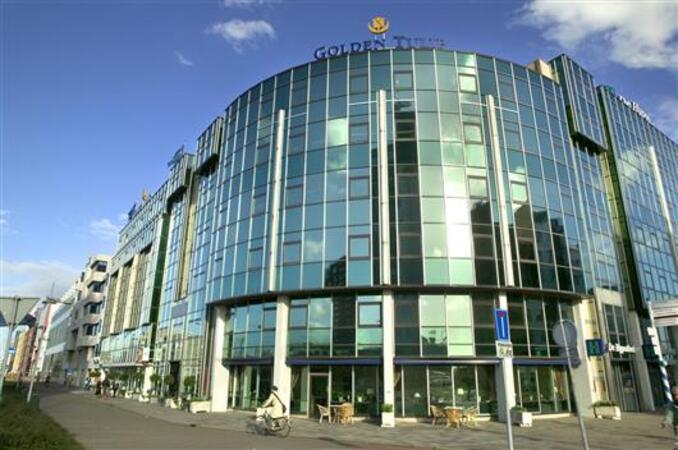
Golden Tulip/Tulip Inn Leiden Centre, Schipholweg 3, Leiden, Netherlands, 2316XB
The 4-star Golden Tulip Leiden Center is located right next to the Tulip Inn Leiden Center hotel; together they accommodate 7 stars under one roof. The hotels are ideally located with Leiden Central Station directly opposite and many motorways within easy reach. A beautiful location in the center of the historic city of Leiden full of museums and picturesque spots. Experience, enjoy and be inspired.
Golden Tulip & Tulip Inn Leiden Center have a large diversity of hotel rooms; from comfortable and modern furnished standard rooms to luxurious executive rooms. In total there are 155 rooms. Furthermore, the hotels have a renovated restaurant called "Rubens", a cozy bar / lounge and an extensive meeting & conference center.
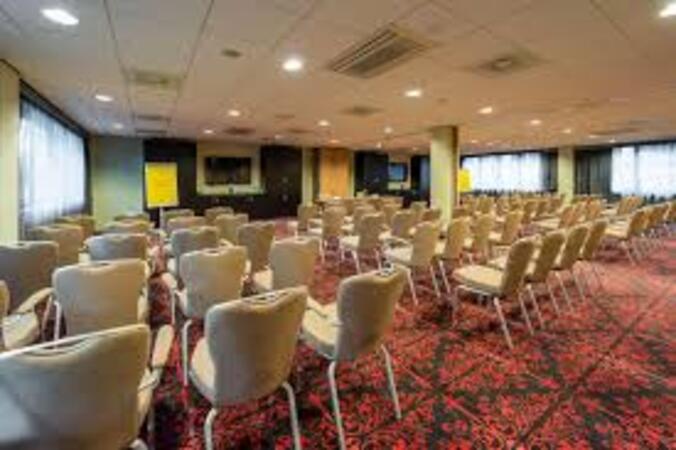
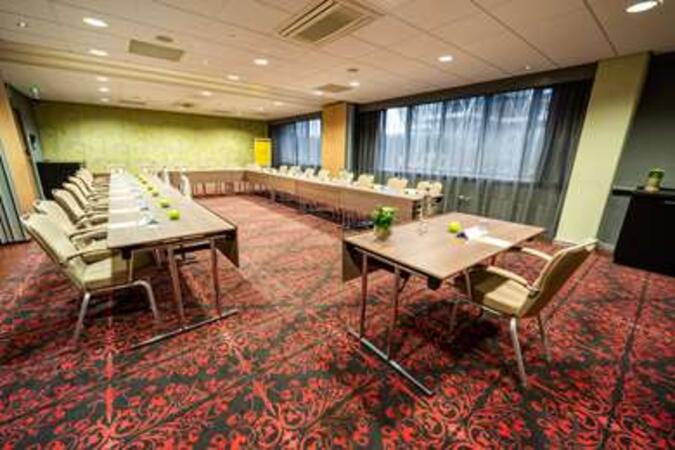
The 6 multifunctional rooms make Golden Tulip & Tulip Inn Leiden Center the ideal location for small and medium-sized meetings. The rooms have a capacity of 4 to 100 people. The meeting rooms offer countless possibilities in terms of setup and technical facilities. Convenience, efficiency, hospitality and professionalism are paramount. All rooms have air conditioning, free wireless internet and daylight.
Until the early 19th century, fishing in Noordwijk aan Zee remained the most important form of income. Later the population started to focus more and more on tourism. More than 1 million overnight stays take place every year. Noordwijk aan Zee consists of several districts and is located on the dunes. There are various catering establishments such as hotels, entertainment centers and restaurants (also on the beach) and there is a shopping center that has a Sunday opening. Every year events take place on the boulevard around the lighthouse on the Vuurtorenplein. The municipality has a KNRM rescue station and a reformed church (1647) with pulpit from the 17th century.
Since the merger with the Noordwijkerhout municipality, the municipality consists of four centers.
Noordwijk aan Zee, traditionally a fishing village, has become a seaside resort with a long coastal strip of approximately 13 km. . Noordwijk aan Zee has two boulevards, both of which are named after a queen, Queen Wilhelmina Boulevard and Queen Astrid Boulevard.
Noordwijk-Binnen radiates the tranquility of earlier centuries in the old core. In 1992 the old village center was designated as a protected village view under the Monuments Act.
Noordwijkerhout, a village and former municipality northeast of Noordwijk..Noordwijk aan Zee is rated as the 12th richest location in the Netherlands. Beer magnate Freddy Heineken has built a villa there with the characteristic green roof.
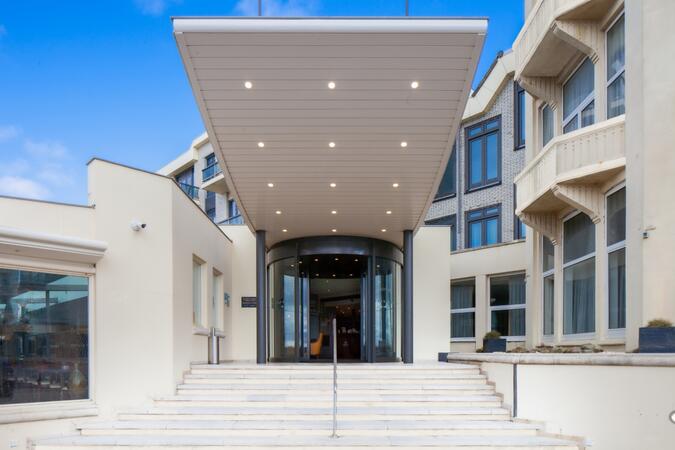
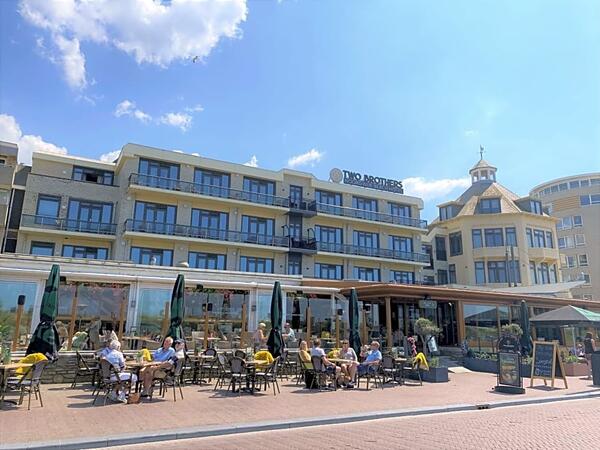
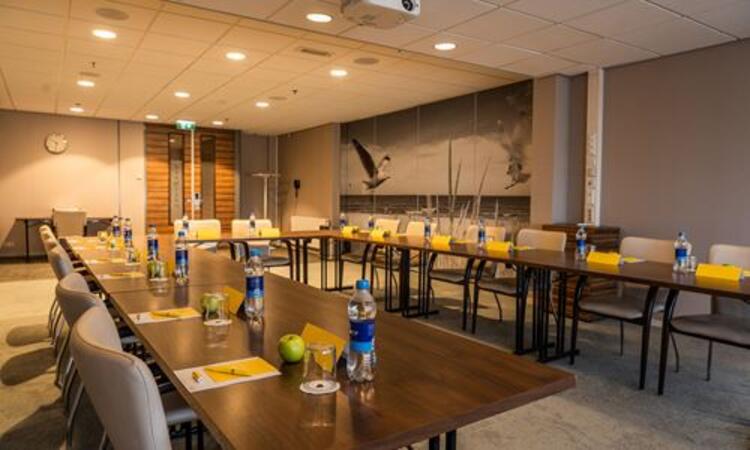
The Two Brothers Noordwijk Beach Hotel is located on the boulevard of Noordwijk with a view of the village and the sea and has several conference rooms and training rooms that make it the perfect place for business meetings and stimulating training. Noordwijk is a 30-minute drive from Amsterdam and The Hague and only 20 minutes from Leiden.
This instructor-led, live training in Leiden (online or on-site) targets intermediate-level Java developers who wish to explore the latest features of Java 21, improve their coding practices, and efficiently implement modern Java applications.
By the end of this training, participants will be able to:
Understand and utilize the new features introduced in Java 21.
Enhance application performance using advanced Java features.
Develop modular and scalable applications using updated libraries.
Implement best practices in Java 21 for robust and efficient code.
This instructor-led, live training in Leiden (online or onsite) is aimed at intermediate-level Java developers who wish to design, develop, deploy, and maintain microservices-based applications using Java frameworks like Spring Boot and Spring Cloud.
By the end of this training, participants will be able to:
Understand the principles and benefits of microservices architecture.
Build and deploy microservices using Java and Spring Boot.
Implement service discovery, configuration management, and API gateways.
Secure, monitor, and scale microservices effectively.
This 35-hour instructor-led programme in Leiden empowers support engineers to sustain Java-based banking systems. Participants will address challenges in Java, Unix, and database environments, utilise monitoring tools, and oversee release cycles through live simulations and practical troubleshooting.
This live training on Leiden is tailored for Java developers exploring Spring and Boot 3.5.5. It addresses core ideas such as IoC, AOP, and JPA, featuring practical exercises to create RESTful services, control transactions, and handle data persistence using Java 21.
This instructor-led, live training in Leiden (online or onsite) is aimed at intermediate-level Java developers who wish to apply design patterns to improve software structure, maintainability, and scalability.
By the end of this training, participants will be able to:
Understand the purpose and benefits of design patterns.
Apply Creational, Structural, and Behavioral patterns effectively in Java.
Improve code reusability, scalability, and maintainability.
Refactor existing codebases using design patterns.
This instructor-led live training in the Netherlands (online or onsite) is aimed at beginner-level developers who wish to learn the basics of Groovy Programming.
By the end of this training, participants will be able to:
Understand the basic programming concepts.
Write simple Groovy scripts and utilize Groovy core features.
Understand and apply basic principles of object-oriented programming using Groovy.
Learn basic error-handling techniques to manage common programming errors and exceptions in Groovy.
This instructor-led, live training in Leiden (available online or onsite) is tailored for intermediate to advanced developers seeking to master the development of microservices using Spring Boot, Docker, and Kubernetes.
By the end of this training, participants will be able to:
Comprehend microservices architecture principles.
Build production-ready microservices using Spring Boot.
Understand the critical role of Docker in containerizing microservices.
Configure Kubernetes clusters to deploy and orchestrate microservices.
This instructor-led, live training in Leiden (online or on-site) is designed for intermediate to advanced developers and architects who aim to develop Java native applications and microservices using Quarkus, with a focus on optimized memory usage and startup performance.
Upon completion of this training, participants will be able to:
Create high-performance, lightweight Java native applications using Quarkus.
Construct and deploy RESTful services and microservice architectures.
Leverage GraalVM for native compilation to enhance startup speed and memory efficiency.
Package and containerize applications for Kubernetes and OpenShift environments.
This live Leiden training guides Java developers from beginner to intermediate levels in creating scalable, non-blocking applications with Spring WebFlux. Participants gain mastery over reactive programming concepts, database integration, and the deployment of responsive REST APIs through hands-on laboratory exercises.
This instructor-led live training in Leiden (online or onsite) targets software architects and web developers who wish to use RabbitMQ as messaging middleware and program in Java using Spring to build applications.
By the end of this training, participants will be able to:
Use Java and Spring with RabbitMQ to build applications.
Design asynchronous message-driven systems using RabbitMQ.
Create and apply queues, topics, exchanges, and bindings in RabbitMQ.
This instructor-led, live training in Leiden is designed for anyone interested in learning Java for the purpose of test automation. It is a streamlined, intensive course with plenty of hands-on exercises to get participants ramped up quickly with the essential programming skills needed to apply to software automation testing. The focus is on the Java fundamentals which can be directly and immediately applied to test automation.
This course does not cover in depth test automation frameworks such as Selenium. It also bypasses the conventional "Hello World" approach to learning Java, as this is not a course on application development. This course is squarely aimed at getting participants up and running quickly with test automation. If you are already versed in Java and wish to get straight into testing with Selenium, please check out: Introduction to Selenium (https://www.nobleprog.com/introduction-selenium-training).
This advanced Java training in Leiden deepens your expertise in abstract classes, interfaces, and multithreading. Learn to master I/O operations, serialization, and reflection while applying design patterns to build robust, scalable applications with enhanced flexibility and real-world performance.
Gain mastery over advanced Java security by exploring JEE, web services, and cryptography within Leiden. This course offers hands-on exercises for secure coding, empowering developers to effectively identify and mitigate common vulnerabilities and critical flaws in Java applications.
This instructor-led course on Leiden focuses on Apache Groovy, a dynamic JVM language designed to complement Java. Participants will explore scripting, closures, meta-programming, and object-oriented principles while constructing a sample application through hands-on exercises and practical lab work.
This 28-hour instructor-led Java Fundamentals training in Leiden addresses core syntax, OOP, collections, exceptions, and I/O. Participants acquire practical experience with Java concurrency, regular expressions, and the platform environment, establishing the essential skills necessary for professional development.
During the training in Leiden, participants will learn about modern processes and tools for creating efficient Java software. They will identify performance-related traps, master benchmarking and profiling, apply tuning techniques, perform memory analysis, and discover optimization tricks using collections or I/O. The subjects and tools acquired are applicable regardless of the project's technology stack, as we concentrate on language-level performance, tooling, and embedded libraries. Tuning sessions cover JVM parameters supplied by Oracle.
This instructor-led, live training in Leiden (available online or onsite) is aimed at developers who wish to use Quarkus to build, test, and deploy applications, fully-powered with Java, but with less resource utilization.
By the end of this training, participants will be able to:
Set up the necessary development environment to start developing applications with Quarkus.
Build, compile, and run applications in native mode using GraalVM.
Utilize Quarkus tooling and extensions for building native applications using Maven.
Containerize, execute, and deploy applications with Docker.
Discover secure coding practices in Java through the OWASP framework. This course equips you to recognise web threats, mitigate common vulnerabilities such as XSS and CSRF, and apply robust secure design principles. Participate in this hands-on training held in Leiden to significantly strengthen your application security competencies.
This instructor-led, live training in Leiden (online or onsite) is aimed at web developers who wish to build functional front-end and back-end web applications with Spring Boot, React, and Redux.
By the end of this training, participants will be able to:
Build a front-end application with React and Redux.
Create RESTful APIs with Spring Boot.
Secure web services with Spring security and JWT web tokens.
This instructor-led, live training in Leiden (online or onsite) is designed for Java developers who aim to use the Spring 5 framework to develop and deploy enterprise web applications.
By the end of this training, participants will be able to:
Install and configure Spring 5.
Understand and implement the latest features of Spring 5.
Access databases with Spring Applications.
Use the new reactive web framework, WebFlow, to make an application reactive.
Integrate a Spring application with legacy Java EE applications.
Test and deploy an enterprise-grade Spring application.
This practical, hands-on course offers a comprehensive guide to developing generative AI applications using Spring AI. Learners will master the integration and configuration of AI models, the design of effective prompts, and the handling of structured responses and streaming. Additionally, the course explores how to leverage proprietary data to enhance application capabilities through Retrieval-Augmented Generation (RAG).
Furthermore, the curriculum addresses conversation memory, AI tools, the Model Context Protocol (MCP), monitoring and observability, as well as security and safeguarding. It also delves into established generative AI patterns and agentic workflows. By engaging in practical exercises, participants will construct and expand Spring AI applications, discovering how to combine these features to deliver robust, production-ready AI solutions.
This instructor-led, live training in Leiden (online or onsite) targets developers who wish to use WebFlux to develop and deploy reactive applications.
By the end of this training, participants will be able to:
Install and configure Spring 5 along with the WebFlux framework.
Develop reactive applications and services.
Read more...
Last Updated:
Testimonials (9)
Setting up Podman for effortlessly working with local containers, as well as using Kafka topics.
- Norfolk Southern
Course - Quarkus for Developers
- The course progression (from JVM internals to more high-level topics)
- Some insights from practical exercises
- Visual style (not some presentation, but a nicely styled page)
Ivan Suvorov - Deutsche Bank
Course - Java Advanced
the knowledge of the trainer was very high - he knew what he was talking about, and knew the answers to our questions
Adam - Fireup.PRO
Course - Advanced Java Security
Trainer was kind and polite, he tried to cover everything and there were a lot of info for 4 days and he did great.
Lucian
Course - Java Fundamentals
The topic is current and I needed to be updated
Damilano Marco - SIAP s.r.l.
Course - Secure Developer Java (Inc OWASP)
The extra information that was shared, the training was not straightforward groovy, which was nice.
Covenant - Vodacom
Course - Groovy Programming
Detailed information provided on the more advanced topics requested.
Farukh Khan - Tandem Solution
Course - RabbitMQ with Java and Spring
The breadth of the topis covered was quite a bit and the trainer tried to do justice to that.
Lakshmipriya Sivakumar - Deque Systems Inc
Course - Spring Boot, React, and Redux
Trainer was good at talking through topics in details and making it easy to understand
Lewis Nangle - AquaQ Analytics
Course - Java Performance
Provisional Upcoming Courses (Contact Us For More Information)
Online Java training in Leiden, Java training courses in Leiden, Weekend Java courses in Leiden, Evening Java training in Leiden, Java instructor-led in Leiden, Evening Java courses in Leiden, Java on-site in Leiden, Java classes in Leiden, Java instructor in Leiden, Java instructor-led in Leiden, Online Java training in Leiden, Java one on one training in Leiden, Java boot camp in Leiden, Weekend Java training in Leiden, Java trainer in Leiden, Java private courses in Leiden, Java coaching in Leiden